Tag: history of technology
-
Making a Cutter for the Engine by Hand
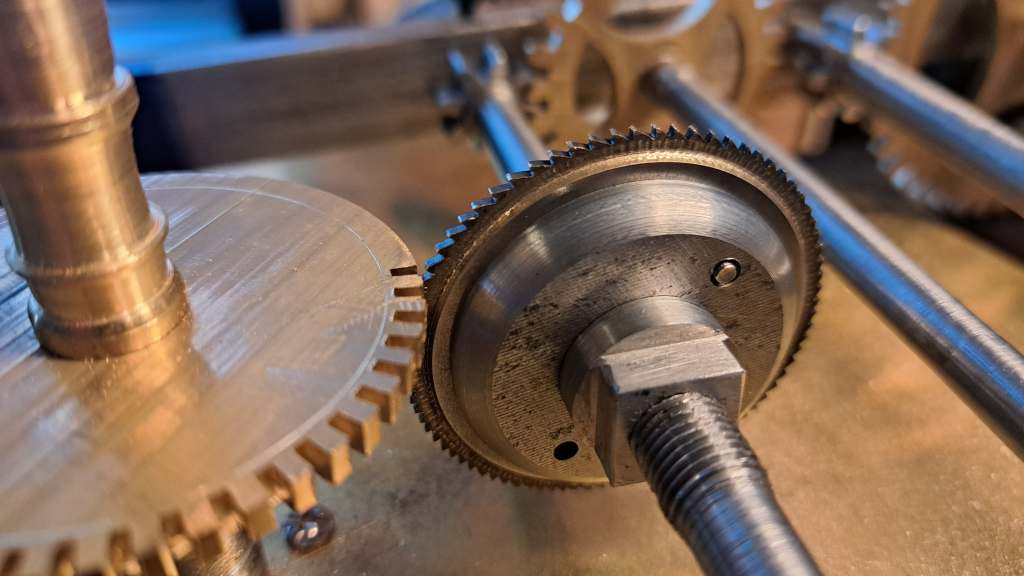
One of the final pieces for the Wheel Cutting Engine I’m reconstructing is the critical cutter – the spiky toothed steel wheel that actually cuts the slots. Excitingly, I identified a set of cutters that go to the Dominy’s wheel cutting engine in storage at Winterthur (in a bag with a lump of lead, half…
-
Forging Thumbscrews (for the Engine)
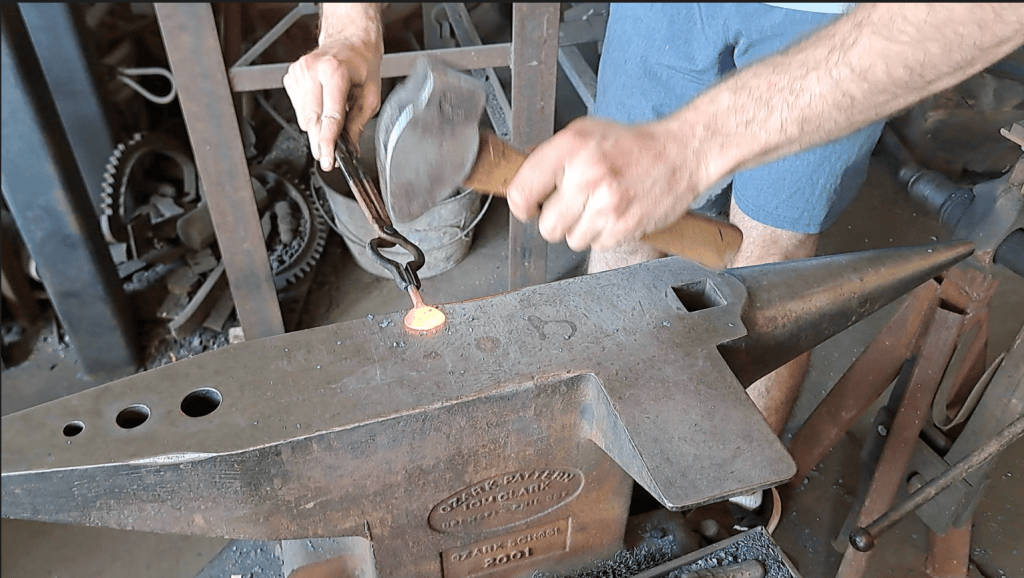
I spent a morning by the coals forging some thumbscrews for my reconstruction of the Dominy’s wheel cutting engine. I made six larger ones and two smaller ones for now. As seen in the video, I filed a nice point to some of them because they will act as cone bearings. Much more could be…
-
Filing Iron Pinions by Hand
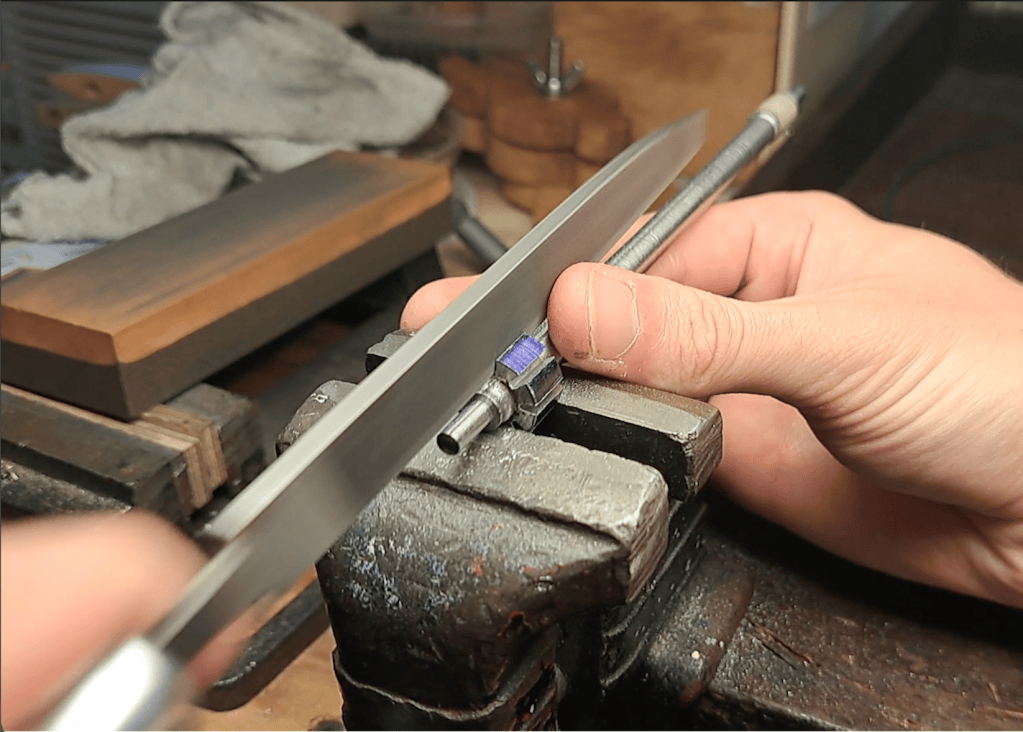
As part of my ongoing reconstruction of the Dominy’s wheel cutting engine, I made three iron pinions by hand. I recorded the process for two of them. Each took about 6 hours. It was a lot of filing! I tried out a couple of files (most of which were kindly given to me by David…
-
Cutting a Brass Gear by Hand (With a Dividing Plate)
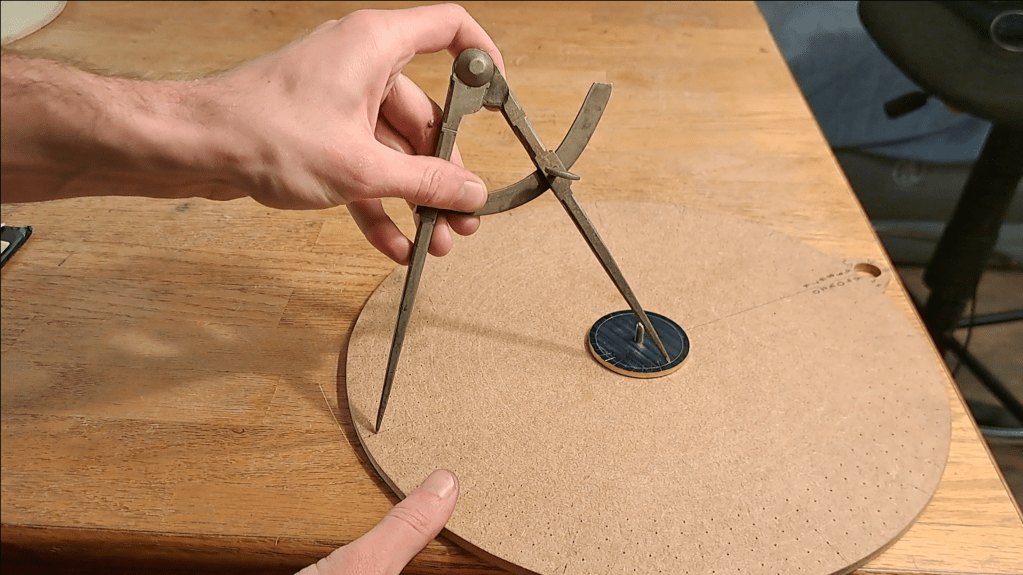
As part of my ongoing reconstruction of the Dominy’s wheel cutting engine, I cut a 32 teeth brass wheel or gear. It is based on the dimensions of the second stage wheel in the Dominy’s engine. To do the dividing of the circle into 32 parts, I used a manual dividing plate, which I made…
-
Forging the 4-Bar Frame and Other Bits to the Engine
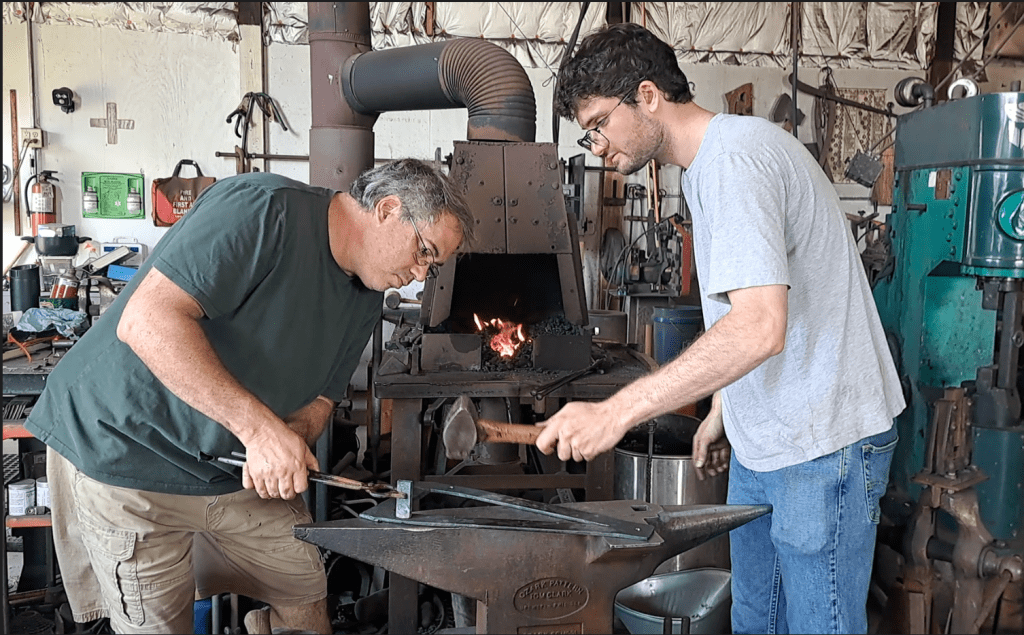
As part of my ongoing reconstruction of the Dominy’s wheel cutting engine, I spent another day working at the forge with Dave Collier. We made some bits that go onto the engine’s triangle and the components for the 4-bar frame. This mainly involved forging tenons into bars, a simple process in theory that is really…
-
Forging the Base and Triangle of the Engine
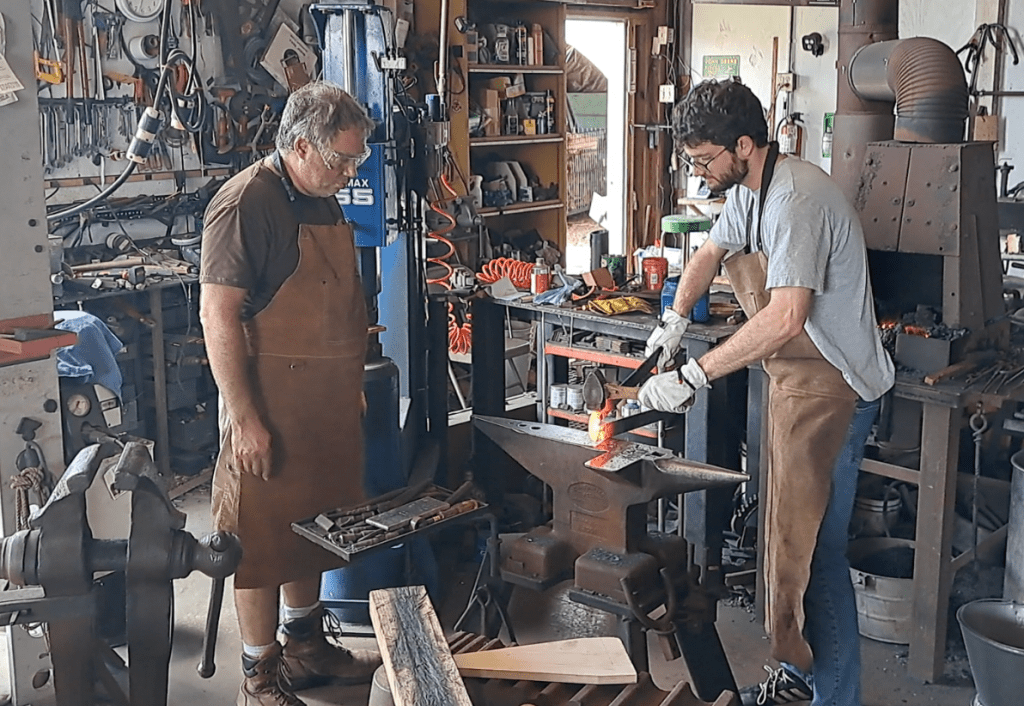
Dave Collier and I forged the base frame and triangle of my reconstruction of the Dominy’s wheel cutting engine. Here’s a 8x fast-forwarded video of the process. This does not include all the jig making, forge tending, and head scratching – it’s just the blow by blow… Blacksmithing is such a fascinating practice: much more…
-
Blacksmithing Techniques Used on the Dominy’s Engine
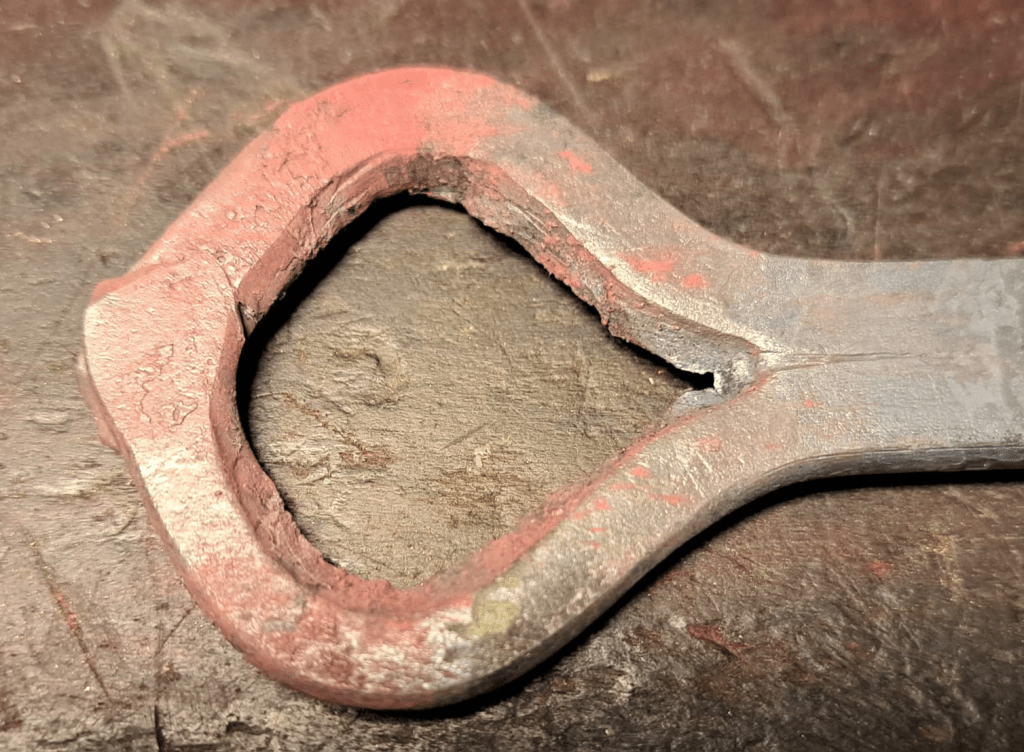
As part of my research and reconstruction of the Dominy’s wheel cutting engine, I visited the machinist, metalsmith, and conservator Daniel Ravizza. Daniel very kindly taught me the basic blacksmithing techniques the Dominy’s (or associated blacksmiths) used to make the wheel cutting engine. This included: Drawing – thinning the material out to be longer Bending…
-
Making a Dividing Plate
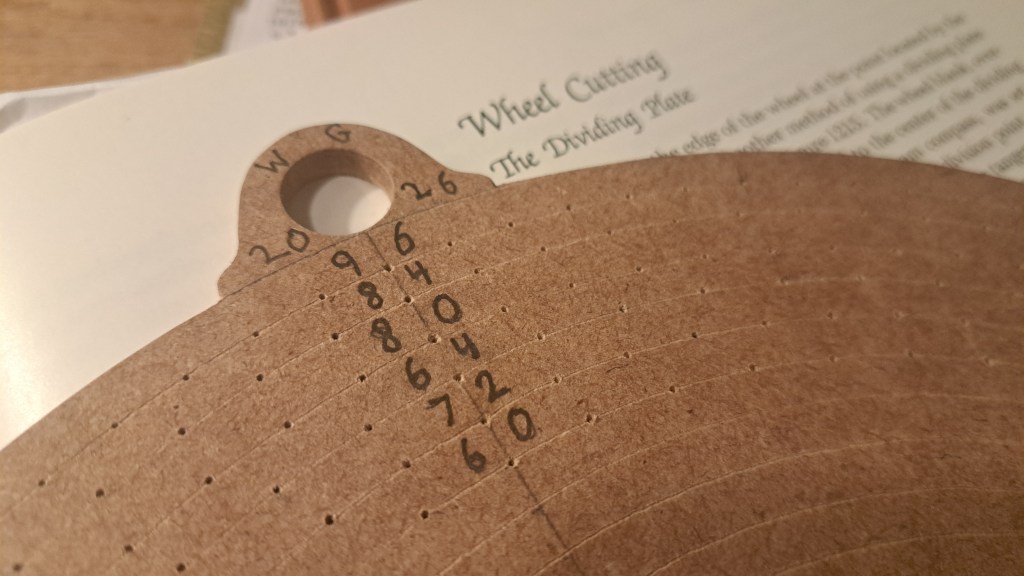
As part of reconstructing an 18th century American wheel cutting engine I am exploring techniques used to divide and cut the teeth into gears (known in horology as wheels). Instead of quite laboriously marking out the divisions onto the wheel to be cut, as I previously explored, I am going to try using a dividing…
-
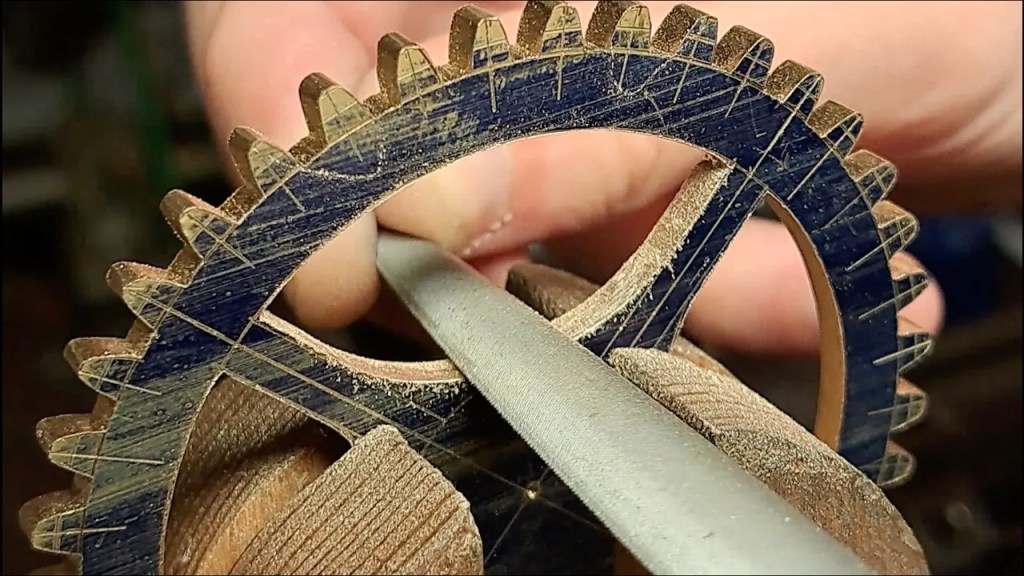
Cutting a Brass Gear by Hand (Without a Dividing Plate)
As part of my reconstruction of a wheel cutting engine, I cut a brass gear by hand with files, a saw, and a treadle-powered lathe. I did not use a dividing plate but rather marked the divisions straight onto the wheel. This is part of my reconstruction of an eighteenth century wheel cutting engine. I…
-
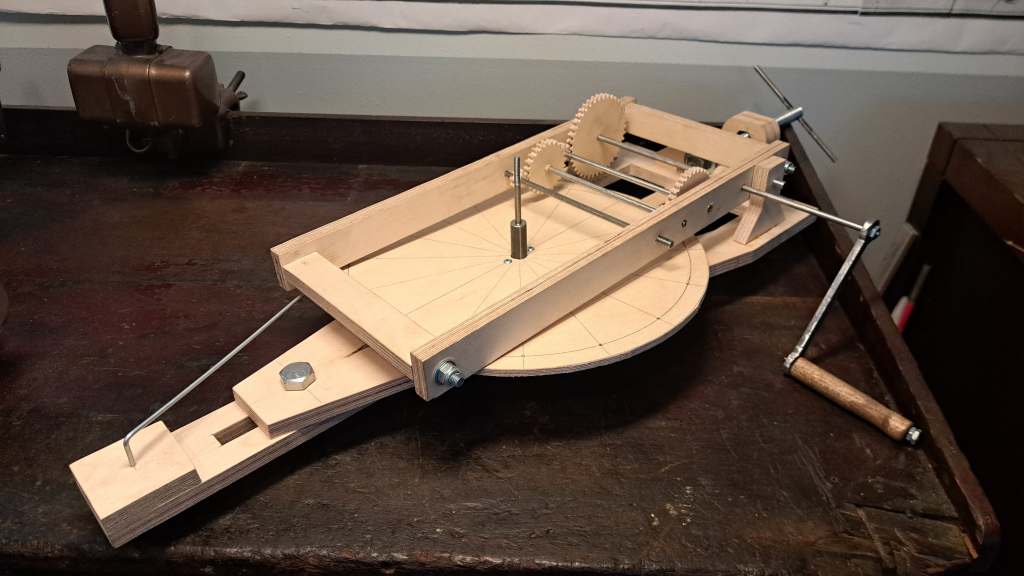
Dominy Wheel Cutting Engine Prototype
For my masters thesis at Winterthur, I have chosen to research a wheel cutting engine in the Dominy collection. Made (or perhaps purchased or commissioned) in the 1770’s by Nathaniel Dominy IV, it is a tool used to aid in cutting the teeth on clock wheels. Compared to other wheel cutting engines, it has several…

