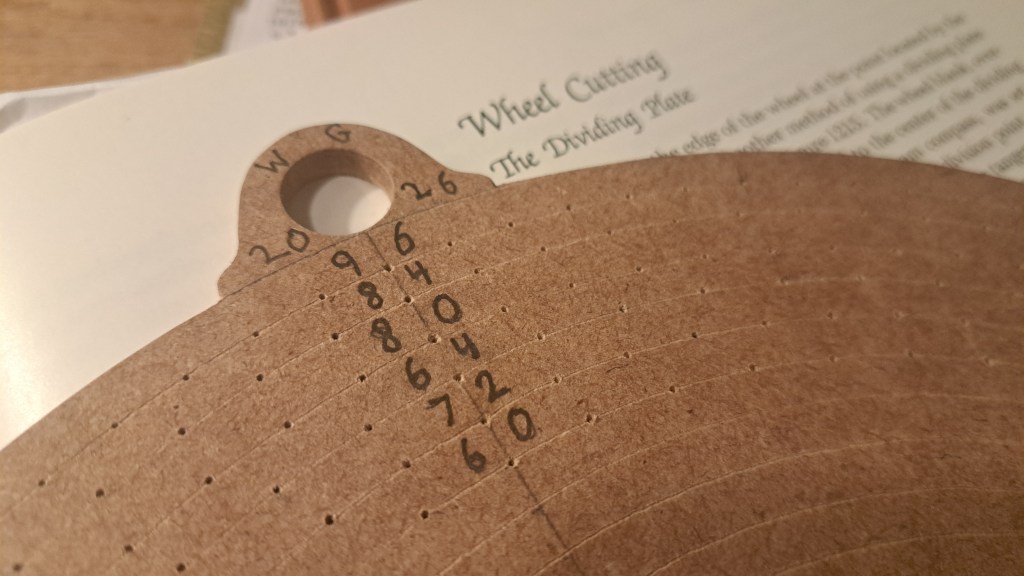
As part of reconstructing an 18th century American wheel cutting engine I am exploring techniques used to divide and cut the teeth into gears (known in horology as wheels). Instead of quite laboriously marking out the divisions onto the wheel to be cut, as I previously explored, I am going to try using a dividing plate.
So I made one based on one featured in pages 619-621 of Horological Shop Tools 1700 to 1900 by Theodore R. Crom (1980). I made this dividing plate by hand using a compass or dividers.
I could not find a brass plate of the right size for cheap enough, so I first tried to use wood, but I found the grain of the wood influenced the dividers too much while scratching in the circles. In the end I used ‘hardboard’ because it does not have a grain and I saw Chris from Clickspring use a similar material on his dividing plate.
I will use this to lay out the divisions for the wheels in the Dominy’s engine. The teeth on those wheels were cut by hand, perhaps using a dividing plate. I recently discovered you can actually see the lay out lines on one of wheels:
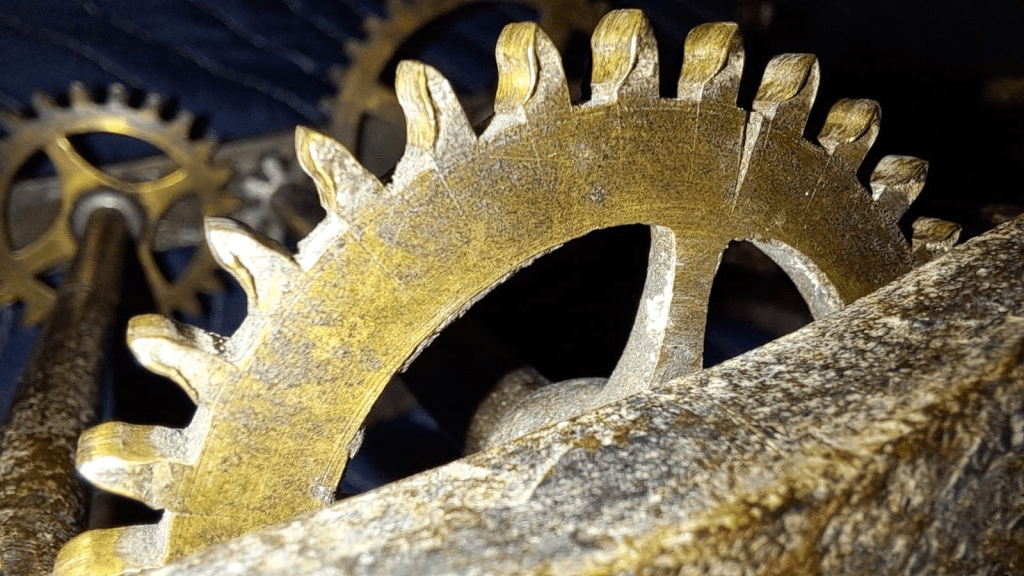
I was thrilled to find those marks!
I will discuss what those marks mean and using the index plate to help cut wheels in a future post. For now, a word on what divisions I chose.
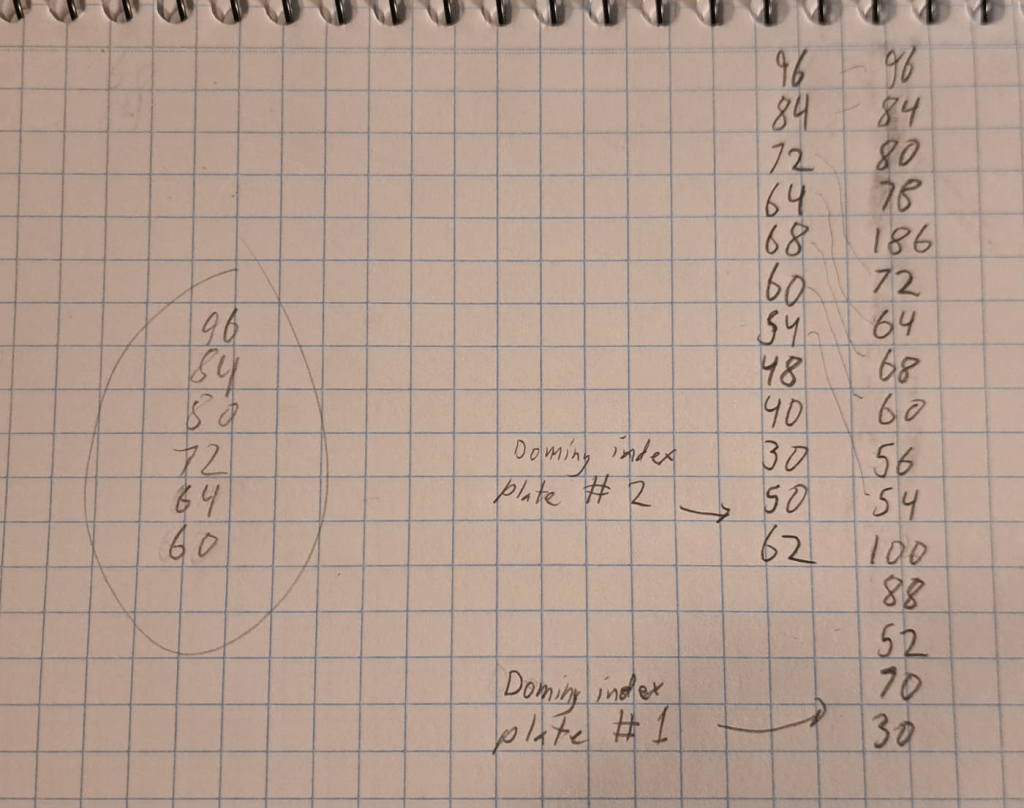
Comparing the number of divisions on the two existing index plates the Dominy’s used in their engine, along with judging which feel most useful, I arrived at 96, 84, 80, 72, 64, and 60.
96 has many useful factors, including 8, 12, and 16 which I was able to use as the basis for the other large divisions. So while the initial 96 was difficult to mark out, after it was established the others came easily.


Leave a Reply