Tag: clock repair
-
Making a Cutter for the Engine by Hand
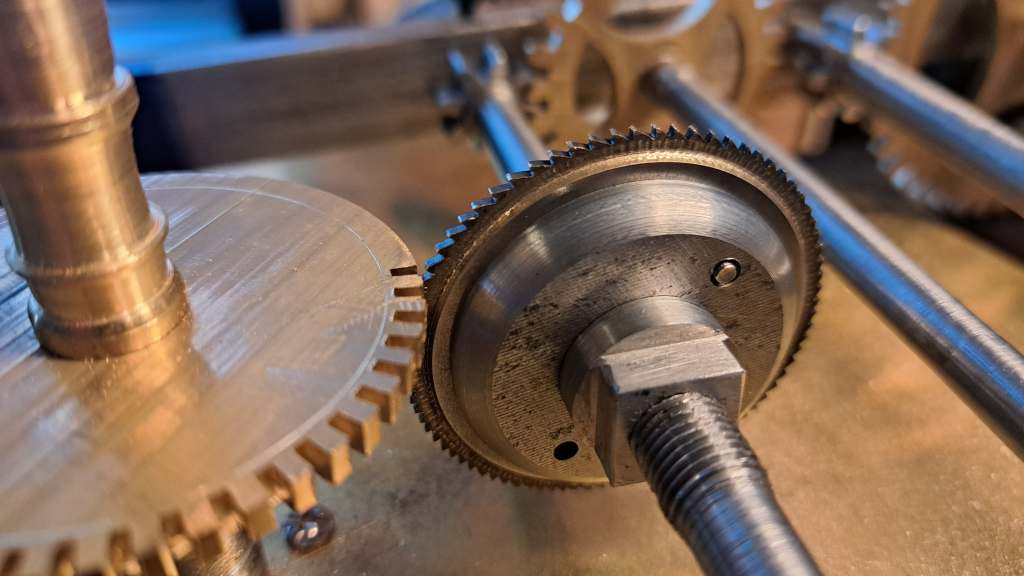
One of the final pieces for the Wheel Cutting Engine I’m reconstructing is the critical cutter – the spiky toothed steel wheel that actually cuts the slots. Excitingly, I identified a set of cutters that go to the Dominy’s wheel cutting engine in storage at Winterthur (in a bag with a lump of lead, half…
-
Filing Iron Pinions by Hand
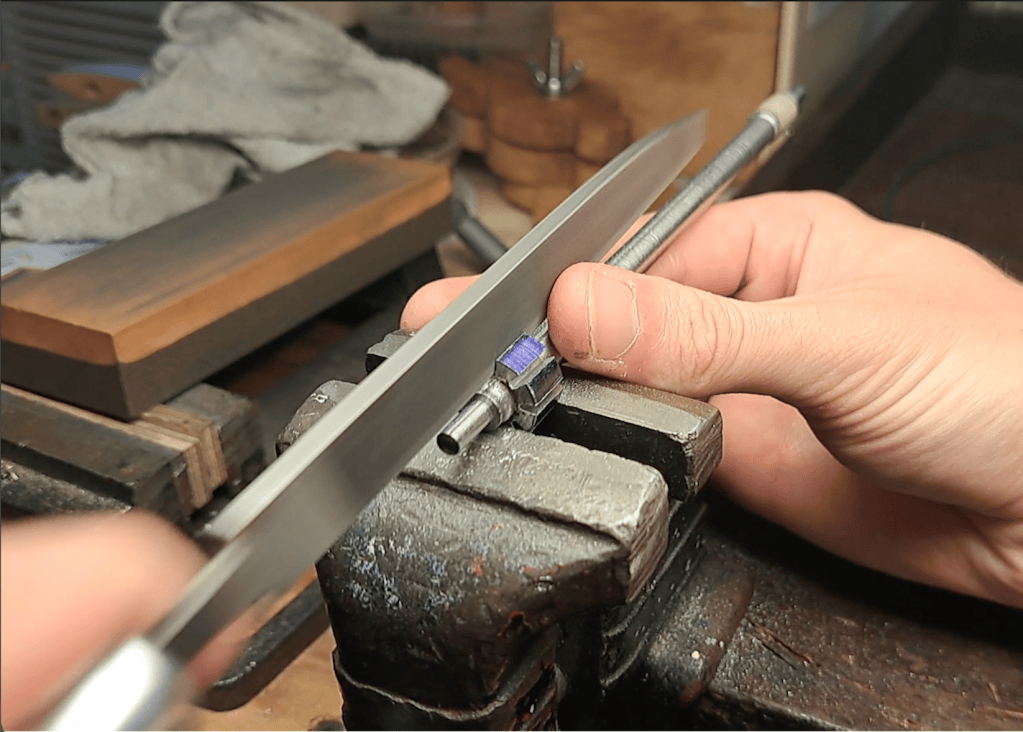
As part of my ongoing reconstruction of the Dominy’s wheel cutting engine, I made three iron pinions by hand. I recorded the process for two of them. Each took about 6 hours. It was a lot of filing! I tried out a couple of files (most of which were kindly given to me by David…
-
Filing a Brass Gear by Hand with a Dividing Plate: Third Wheel for the Engine
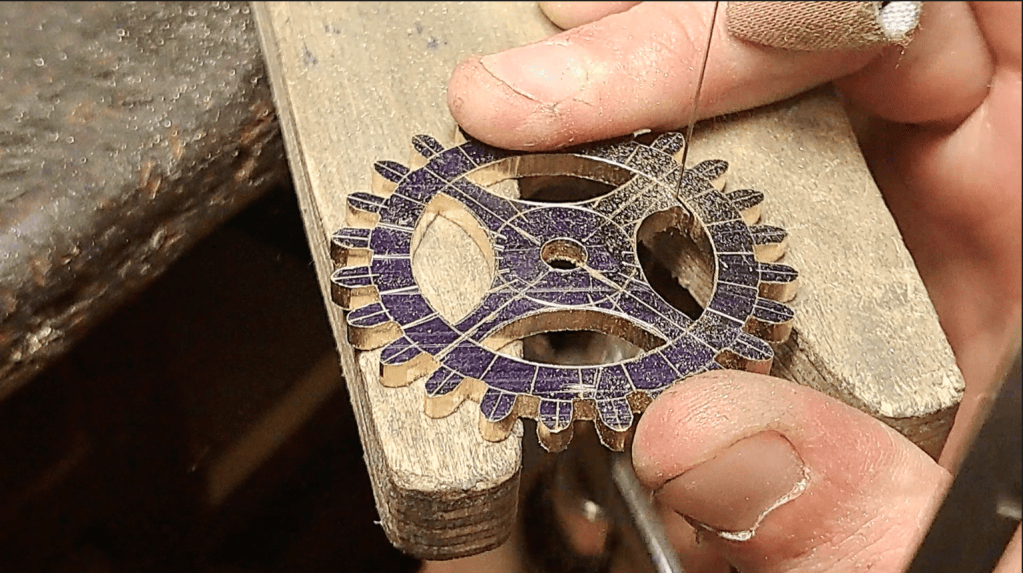
For the third wheel in my reconstruction of the Dominy’s wheel cutting engine, I again used the manual dividing plate, but this time with an indexing arm instead of a compass. In cutting out the teeth, I decided to just use files, foregoing the jeweler’s saw. The file I used to remove most of the…
-
Cutting a Brass Gear by Hand (With a Dividing Plate)
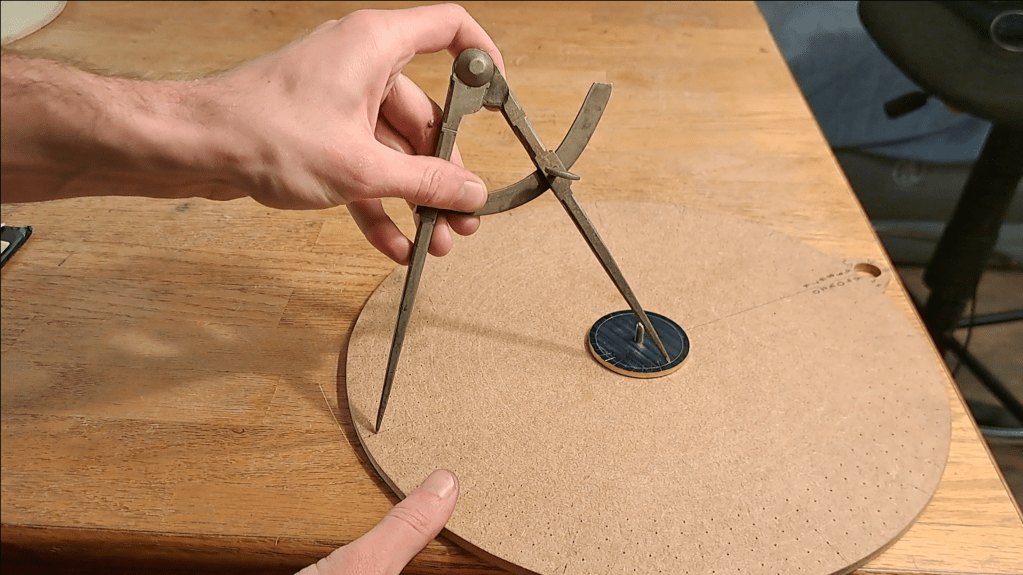
As part of my ongoing reconstruction of the Dominy’s wheel cutting engine, I cut a 32 teeth brass wheel or gear. It is based on the dimensions of the second stage wheel in the Dominy’s engine. To do the dividing of the circle into 32 parts, I used a manual dividing plate, which I made…
-
Making a Dividing Plate
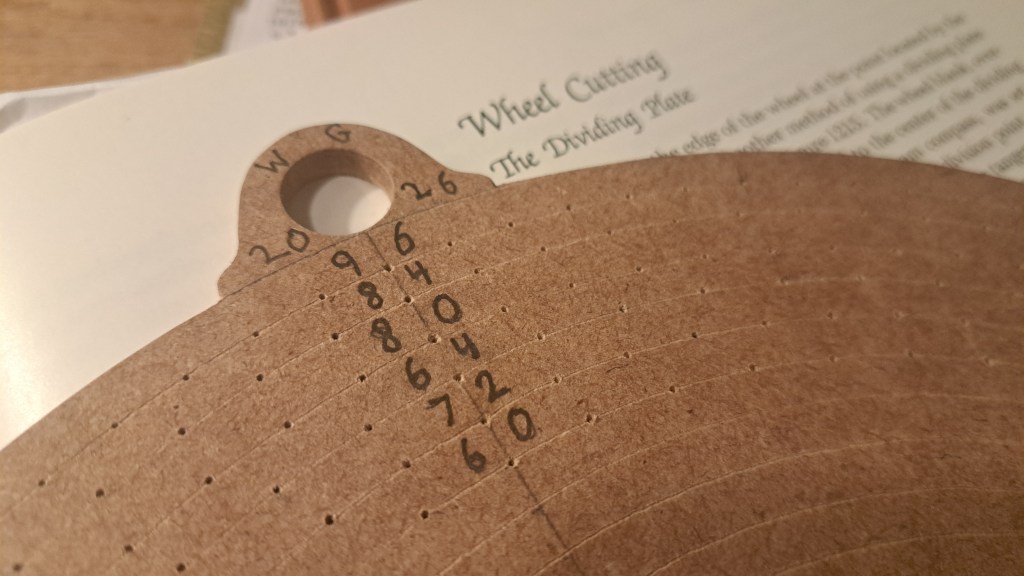
As part of reconstructing an 18th century American wheel cutting engine I am exploring techniques used to divide and cut the teeth into gears (known in horology as wheels). Instead of quite laboriously marking out the divisions onto the wheel to be cut, as I previously explored, I am going to try using a dividing…
-
Verge or Crown Wheel Escapement Comtoise/Morbier Clock
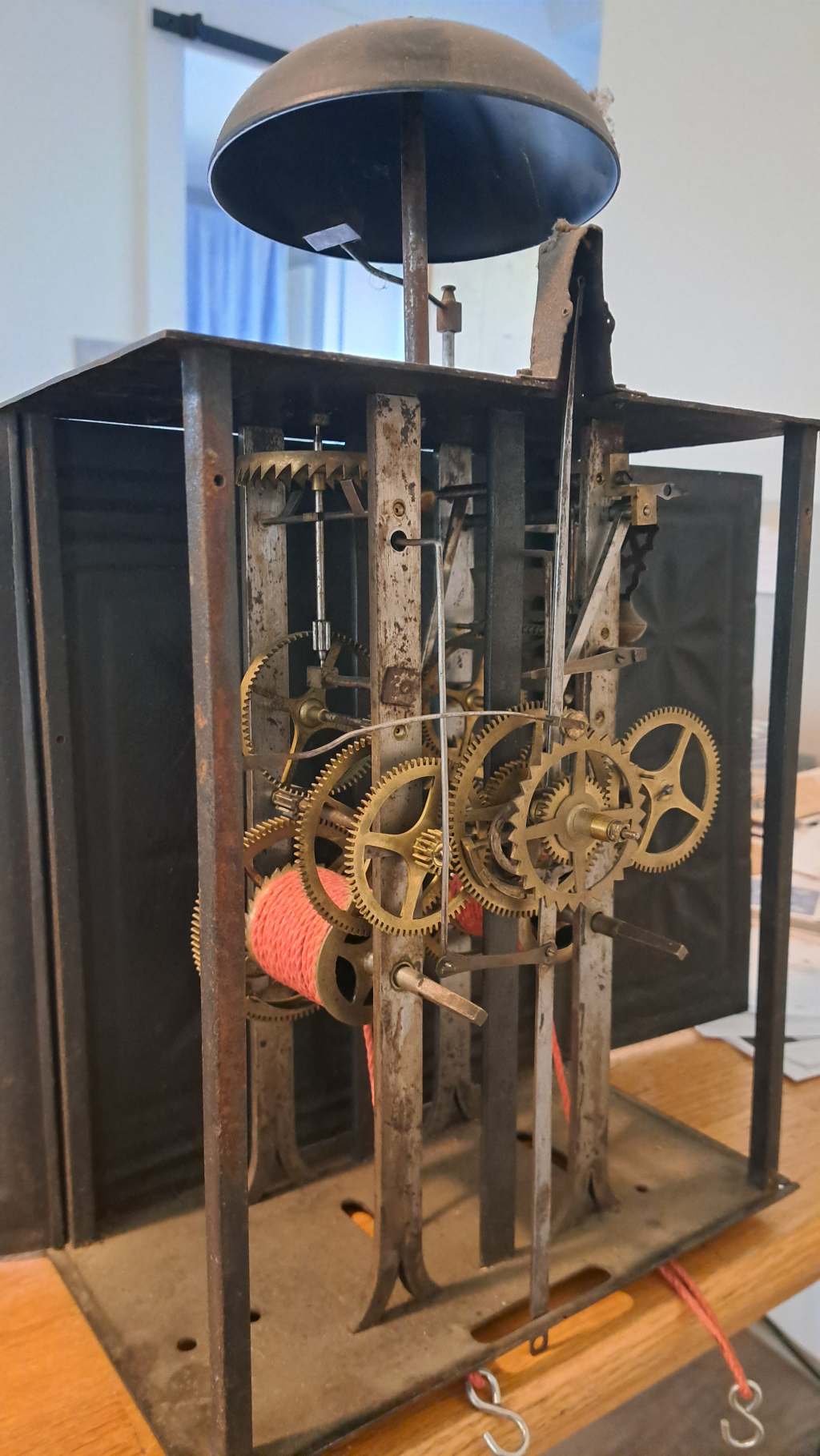
This is a french Comtoise or Morbier clock with a crown wheel escapement. Also known as a verge escapement, this form of controlling the release of energy is the earliest known type of escapement, and the one used for the longest time, supplanted in the early to mid 19th century by the anchor escapement. Here’s…
-
Repairing an Eli Terry 30-Hour Wooden Clock
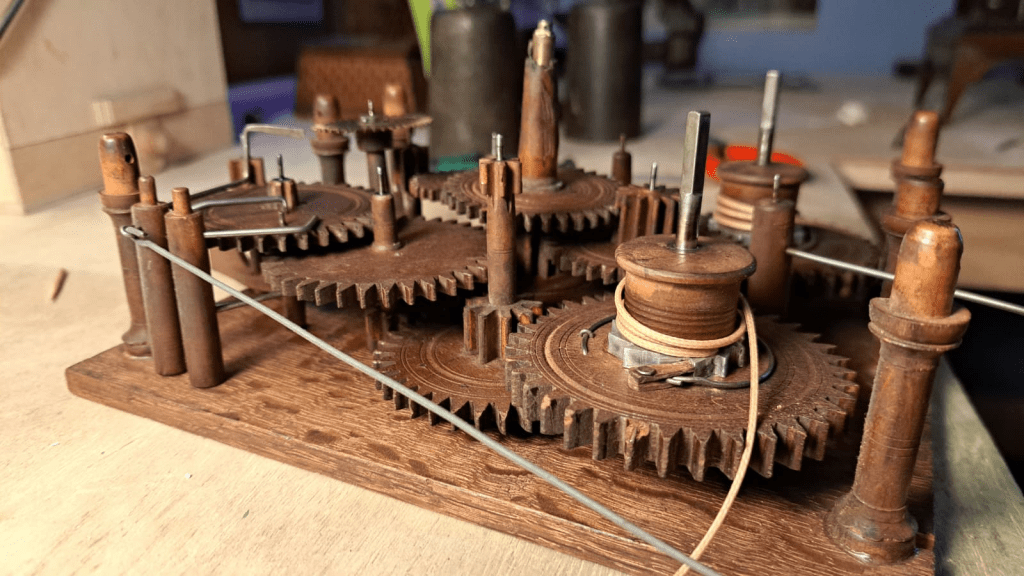
Here is a beautiful Pillar and Scroll clock, likely dating to the 1820’s or 1830’s. Eli Terry innovated new ways to produce wooden works clocks, achieving the first mass-production with interchangeable parts. Several very clever design and production details made this clock affordable to more people than previous brass-movement tall case clocks were. Our first…
-
30 Hour Ogee
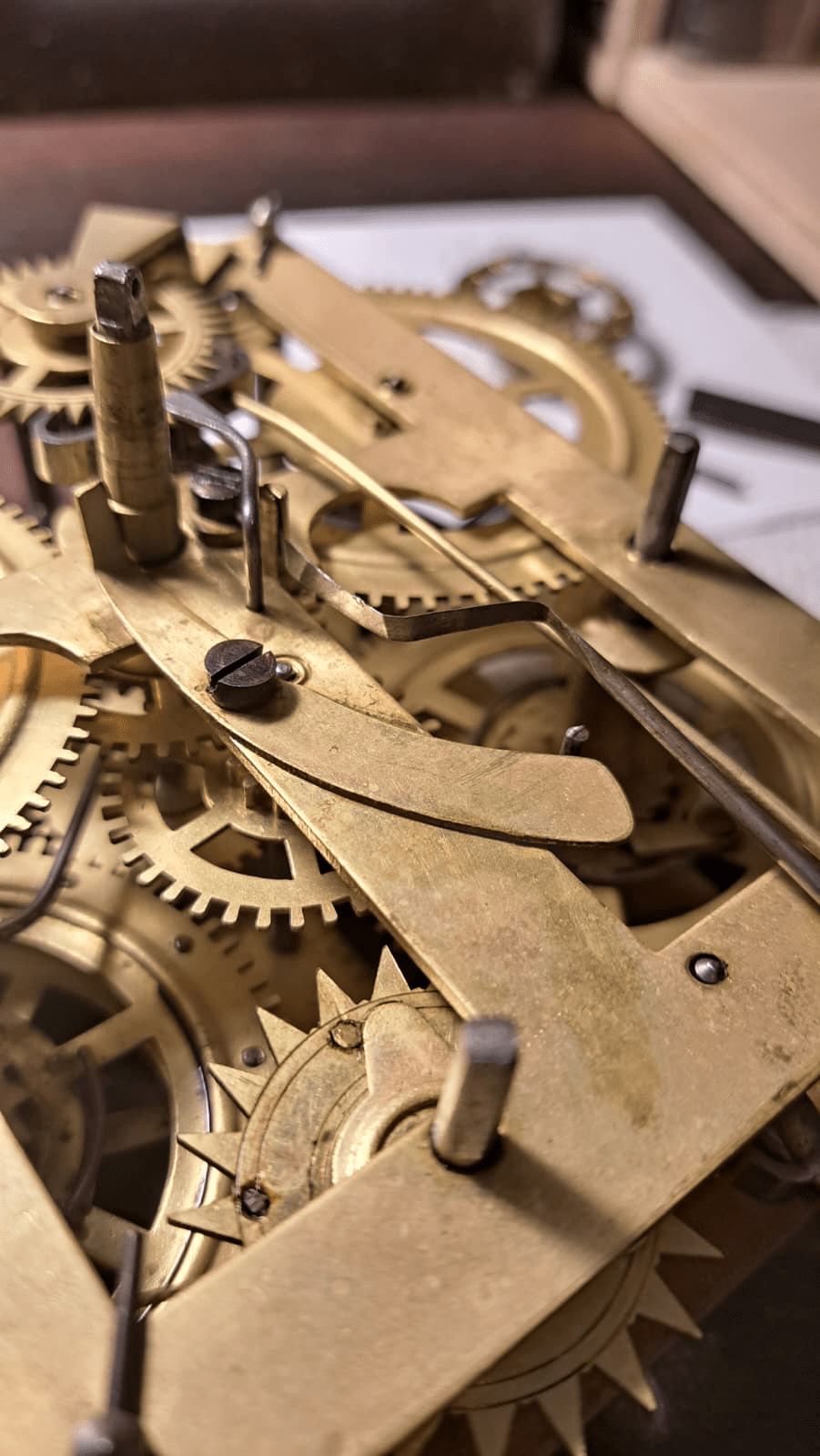
Ogees are my favorite (of the common clocks I see) to work on. Here’s a nice example I fixed for my friend Thomas. It had a series of small issues: The suspension spring was bent and kinked. I was able to just straighten it out. The escapement pallets had some wear in the form of…
-
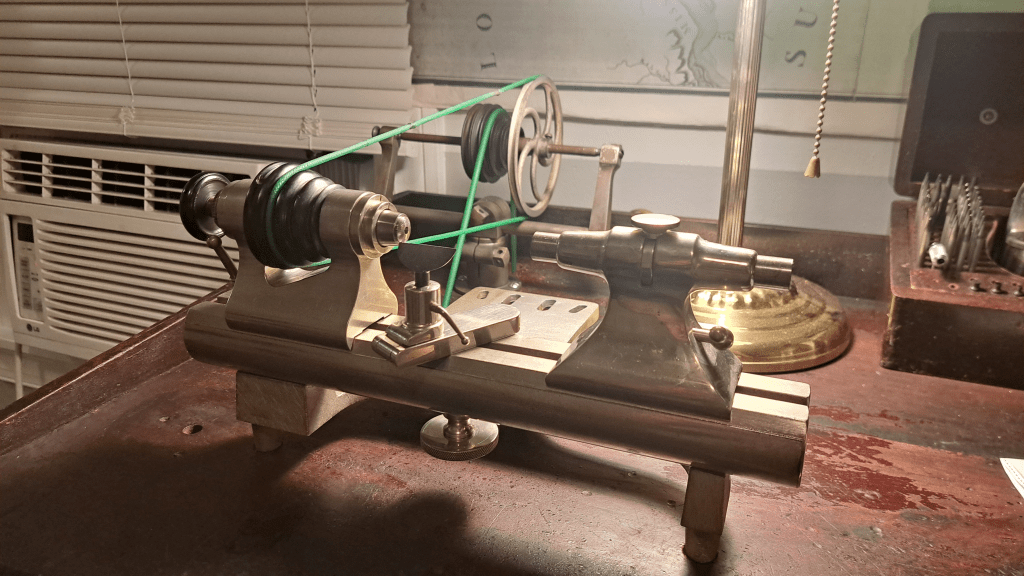
Treadle Powered Watchmakers Lathe; or Becoming a Cyborg
I bought a treadle or pedal powered watchmakers bench on facebook marketplace from a kind clockmaker. The bench did not come with a lathe, so I planned to use my electric powered watchmakers lathe – just without the electric motor. I drilled holes about a 1/4 inch into the table to recess the feet of…
-
![Vice for Clock Wheels [Gear Wheels]](https://whatwillmakes.com/wp-content/uploads/2025/07/20250713_201044-e1753335902553.jpg?w=1024)
Vice for Clock Wheels [Gear Wheels]
A very nice clockmaker showed me a tool I’d never seen before: a vice for holding clock wheels to easily work on them. The jaws of the vice are shaped perfectly to hold a wheel for easy access with files or polishing sticks: I set out making my own based off the pictures I took.…

