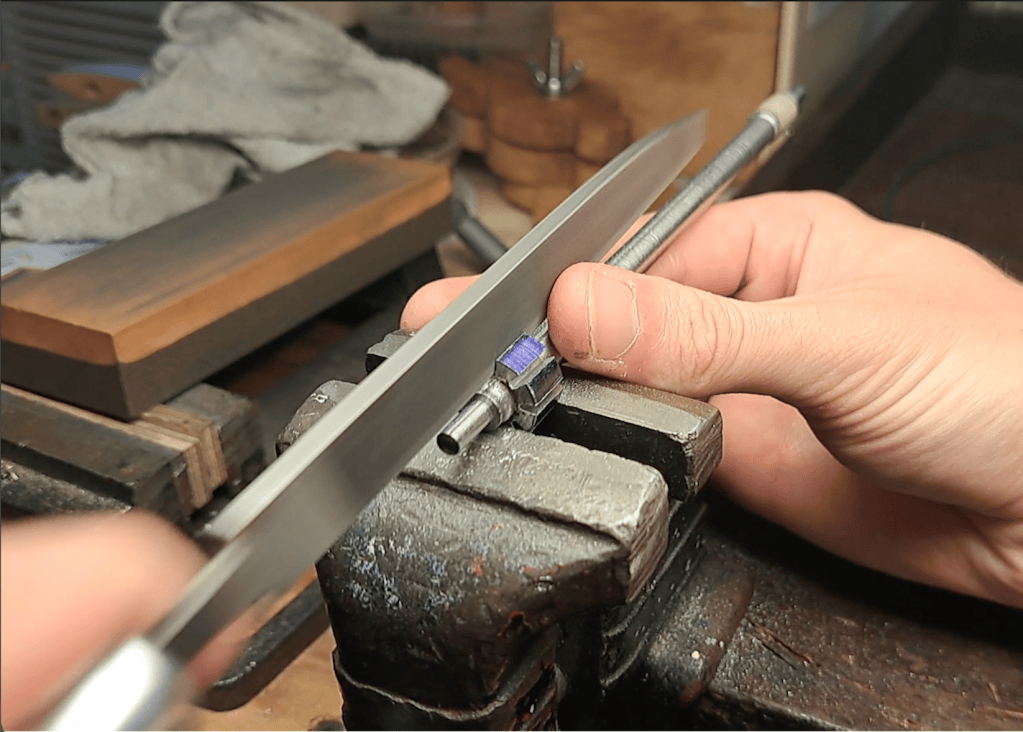
As part of my ongoing reconstruction of the Dominy’s wheel cutting engine, I made three iron pinions by hand. I recorded the process for two of them. Each took about 6 hours.
It was a lot of filing! I tried out a couple of files (most of which were kindly given to me by David Lindow), and found myself using a 6-inch ‘bastard’ cut with a nice wedge shape profile for removing most of the material. Then I finished up with a barrette needle file.
As discussed when I filed a gear wheel, that wedge-shaped file is comparable to this so-called “Chisel” owned by the Dominy’s that I found in storage at Winterthur:
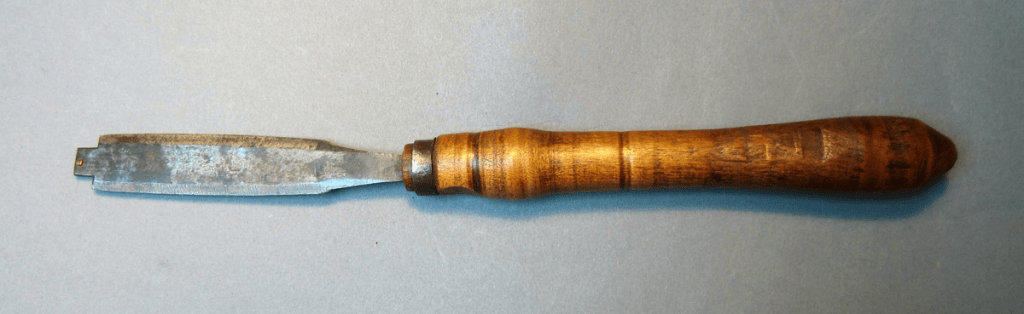
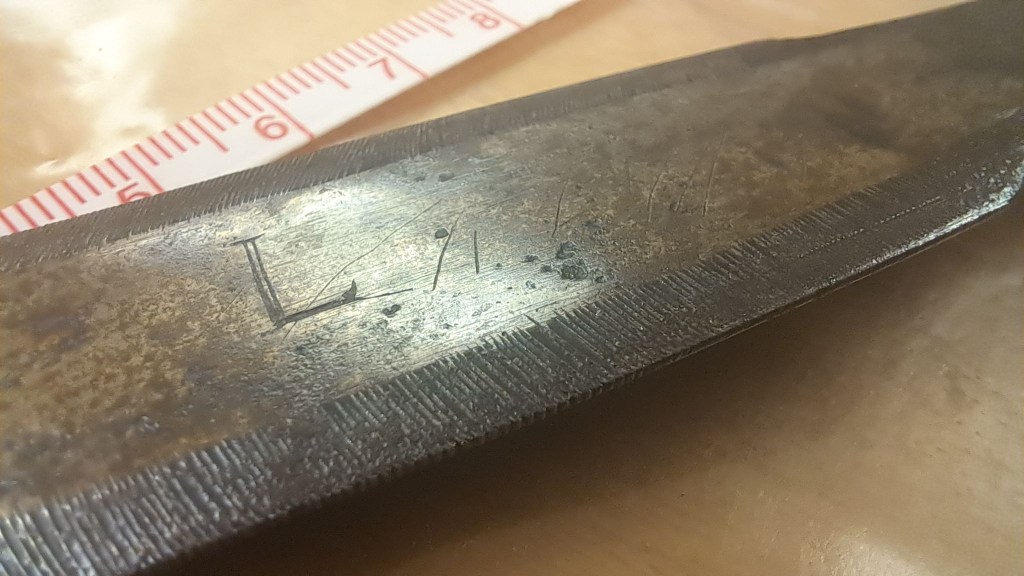
Although it is labeled “(for wood) (Chisel),” the edges have file type teeth cut into them and the profile is a deliberate gear-tooth-esque wedge shape:
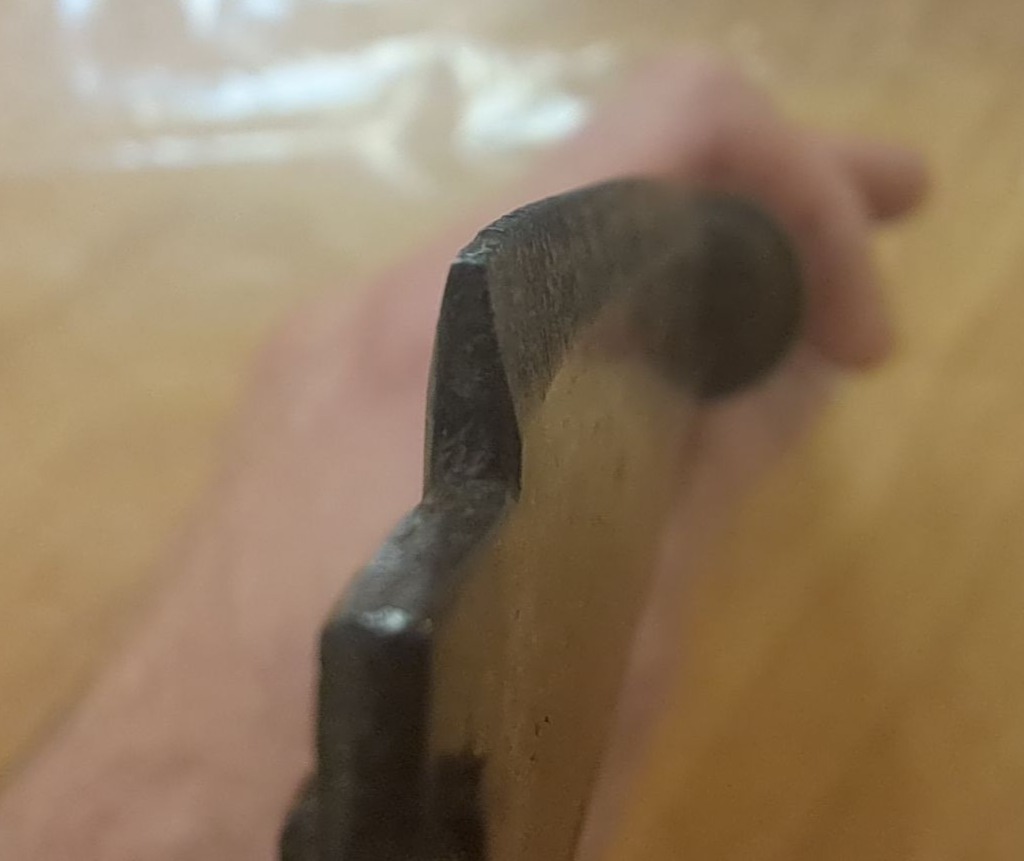
Furthermore, it has a a thumb rest relief cut out on the handle near the ferrule, very much suggesting it is meant to be held with the edges pointing up and down – the way I used the similar file in the videos.
I do not know why the Dominy’s has a shoulder on the tip. Perhaps this tool has been used for several different jobs. Interestingly, I did find myself several times improvising a sacrificial piece of metal for the end of the file to rest on the axle the pinion is on, both so the file would not scratch the axle and so it would be held at a consistent height. It helped me control the depth of the cut. I wonder if the square shoulder and small rivet on the end of the Dominy’s file is there for a similar purpose. Perhaps a block could be attached to it to keep the file resting at a consistent height?
Stay tuned for the finished engine, and eventually my master’s thesis on this research, where I will discuss the Dominy’s tools in more detail and context.

 What Will Makes
Leave a comment