“Dickory Dickory dock
The mouse ran up the clock
The clock struck one
The mouse sat still
The Dickory Dickory clock was ill!”
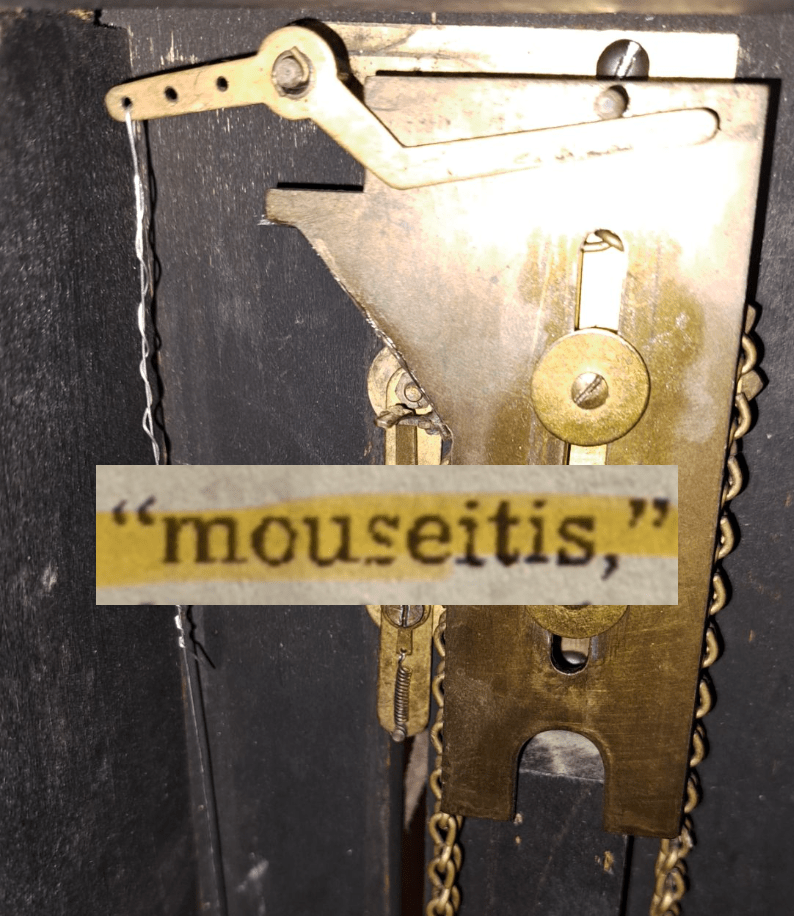
Here is a charming clock invented by Elmer Ellsworth Dungan around 1908 for his daughter who loved the nursery rhyme: “The Dickory Dickory Clock.” [at various times and places the rhyme has gone “hickory dickory,” “dickory dickory,” “zickety dickety,” etc.]
I encountered a later version of model II, sporting a hairspring movement at the base of the clock with a regulator lever accessible from the front. I want to record what Jennifer Hohman and I discovered was crucial to ensuring this version operated smoothly.
Assuming you know how to get a fairly basic time and strike hairspring movement operating well, there are next some obvious areas to check for proper operation: the sliding action of the mouse, the fit of the chain on the sprockets, the existence of the hooks on the chain to catch the mouse and the sprung lever on the mouse to engage the hooks, the correct sequencing of striking when the mouse is at the hour marks, and the trip wire running from the striking rack to the mouse-release mechanism at the top of the clock.
It may be the case that even if those parts are all in good order, the fearless rodent will still remain steadfast at the once dreaded strike of one.
I’m afraid to say, my friend, that you are stricken with a nasty bout of Mouseitis! [duh duh DUH!!]
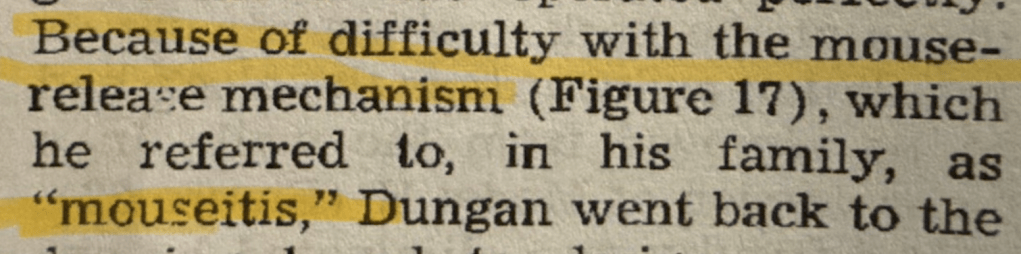
“Mouseitis” as Dungan called it, plagued the first and second production models. Although this affliction is old, modern science has developed new techniques to fight it.
First, I recommend a strict regiment of polishing of the top of the sprung mouse lever and the bottom of the mouse-release mechanism. This will ensure that when the release mechanism drops like a guillotine that the figurative blade is sharp enough, and the neck is exposed enough, to cause the mouse catch lever to move to the side and let the mouse fall off the chain hook (or pin, as some refer to it).
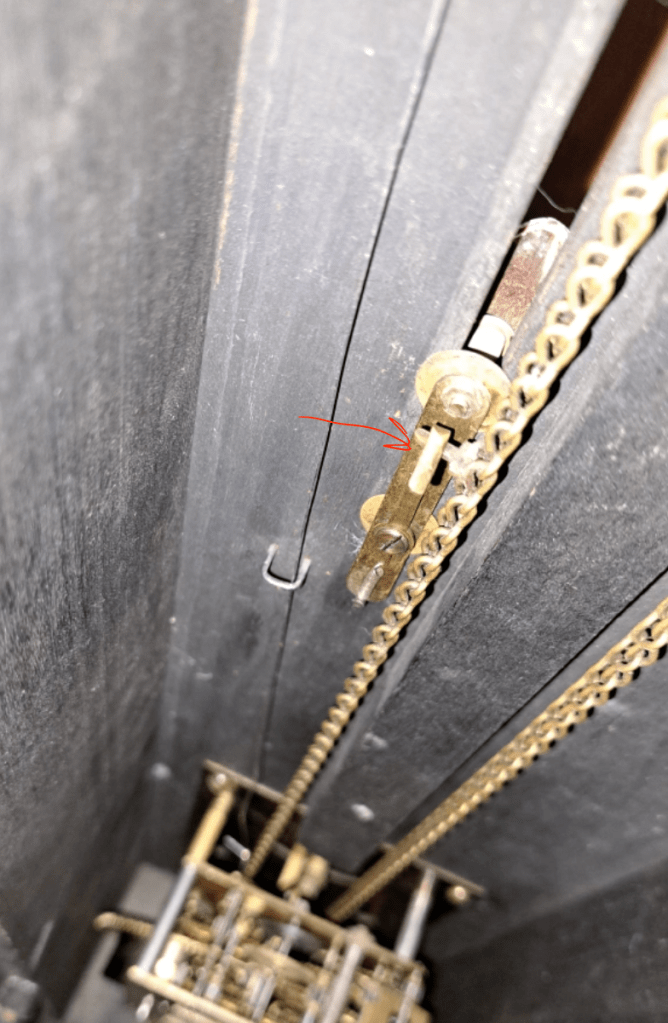
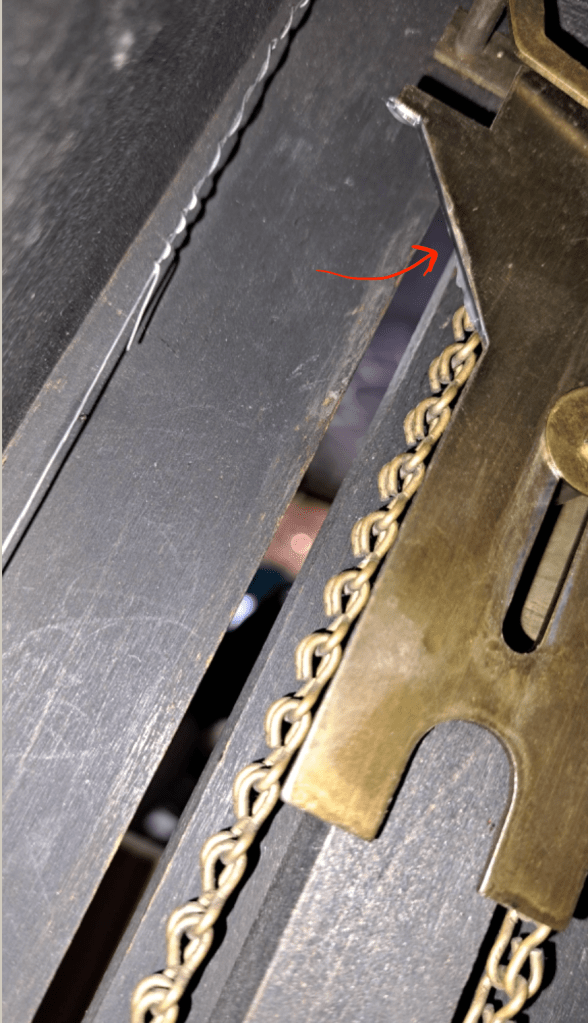
That was a friction-reducing measure, necessary if the release-mechanism has too little force to knock the mouse off the chain hook.
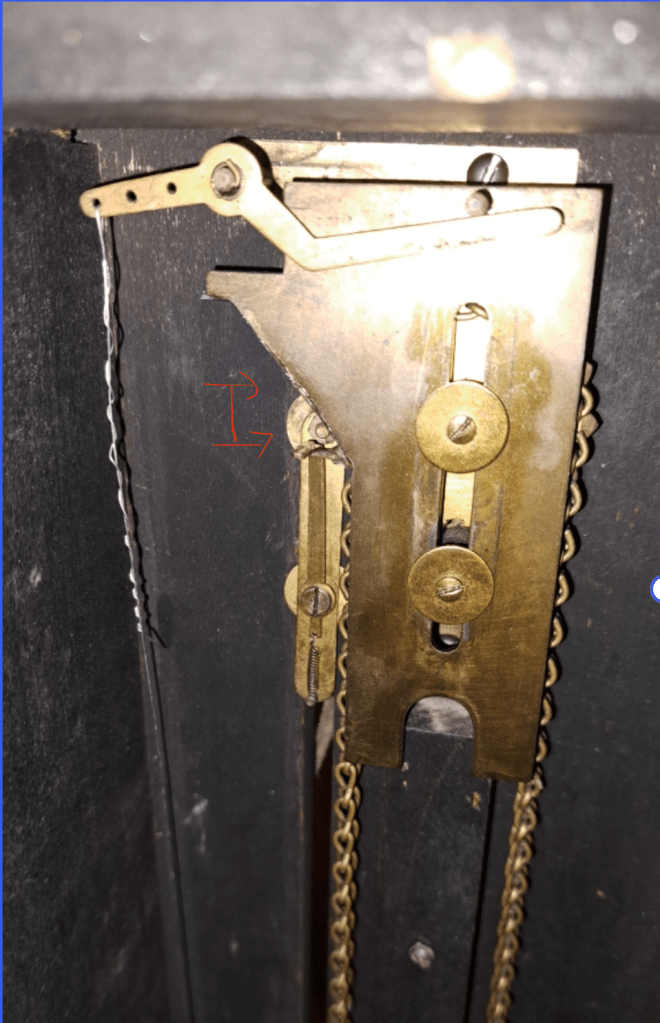
The next treatment aims at increasing the force of the release-mechanism: Align the chain so that the release-mechanism has room to accelerate before reaching the mouse.
I noticed that even when the mouse is correctly sequenced with the movement so that it reaches the hour marks when the clock strikes, there is still a bit of room to adjust the chain up or down ~1/2″. In the below picture, the clock is seconds from striking, but note that there is still room between the release-mechanism and the mouse. This gap is critical to making sure the sliding guilliotine-like plate gains enough momentum to scare off the pale creature.
Hopefully the mouse now fleas the scene when a single strike echoes:
But we still need to make sure the mouse creeps back up the clock. The key to this is replacing the padding.
If the padding on the bottom of the slot is worn like on mine, the mouse will violently hit the chain hook and sometimes advance past it – not collecting go and not collecting $200.
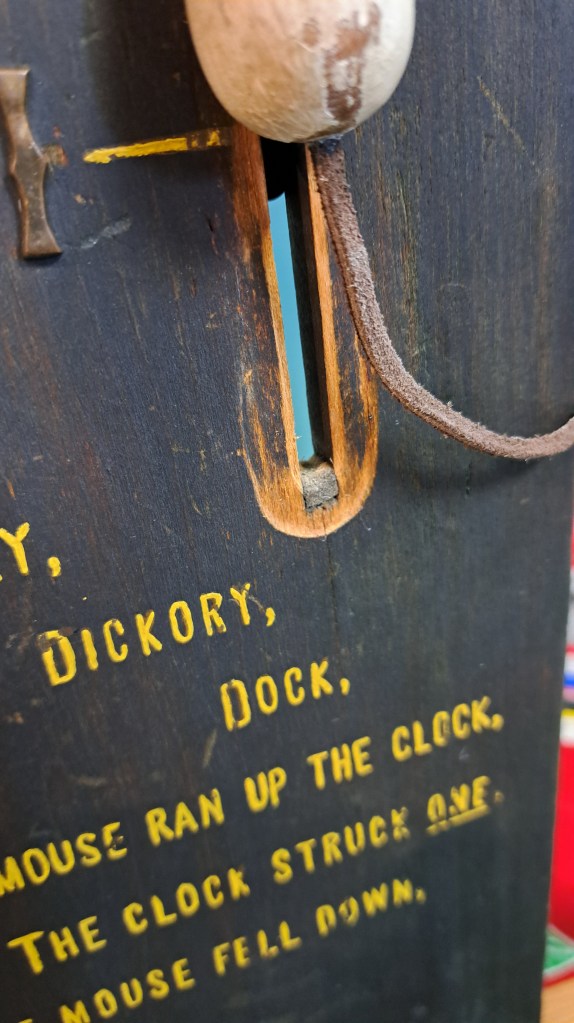
Replace the padding with sufficient felt or cotton to keep the mouse resting just above the hook at 1:00:

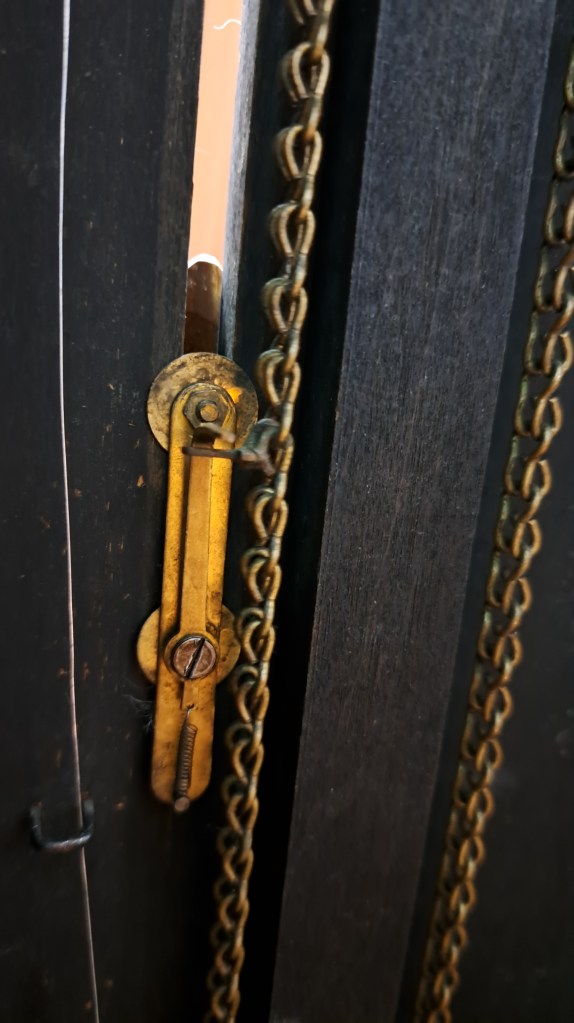
Well I hope that can help someone trying to diagnose and cure this charming clock!
Here is a NAWCC article by Charles Terwilliger going into more details and history on these clocks:
 What Will Makes
Leave a comment