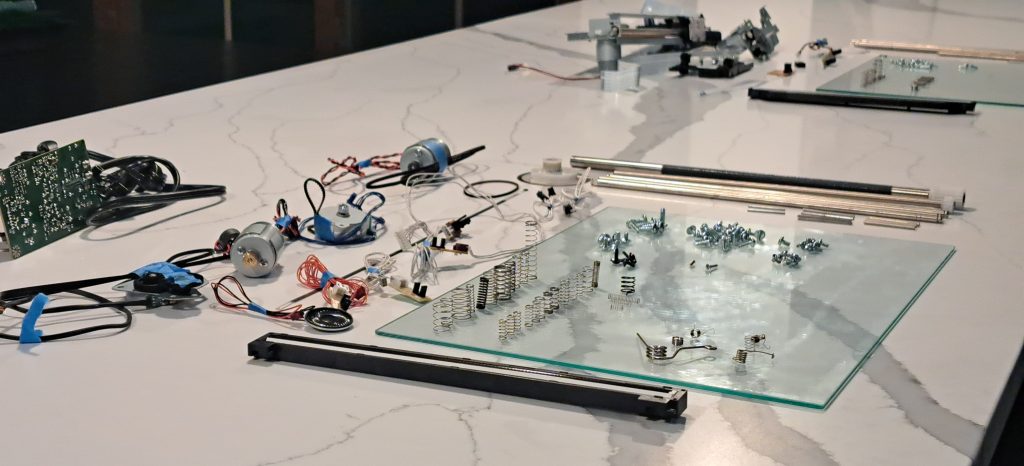
The same thing that causes printers to break so often makes them worthwhile to take apart: complex mechanisms with moving parts.
I scored 3 printers at a dump recently and decided to record their yield.
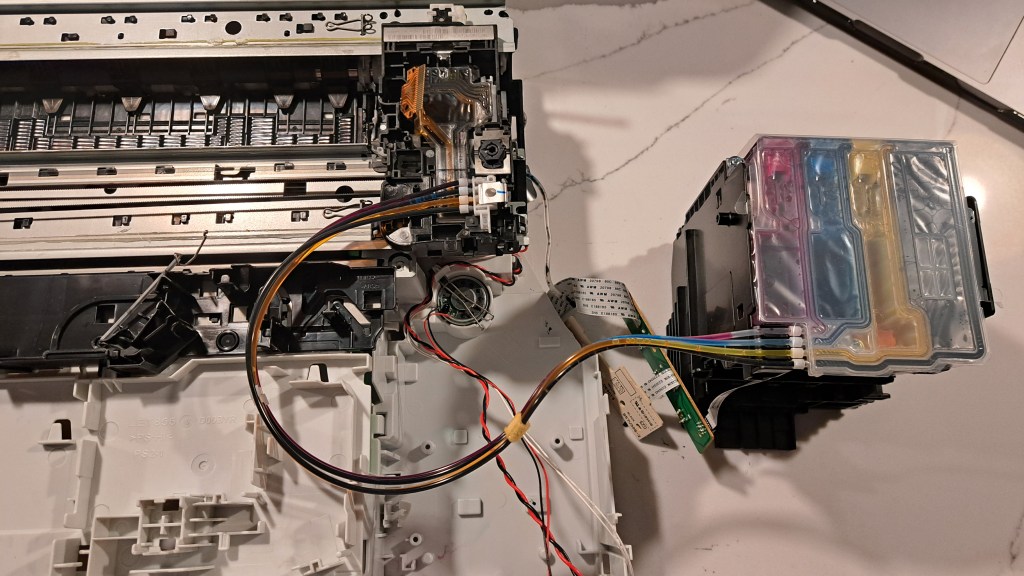
Cracking them open can be dangerous given all the ink.
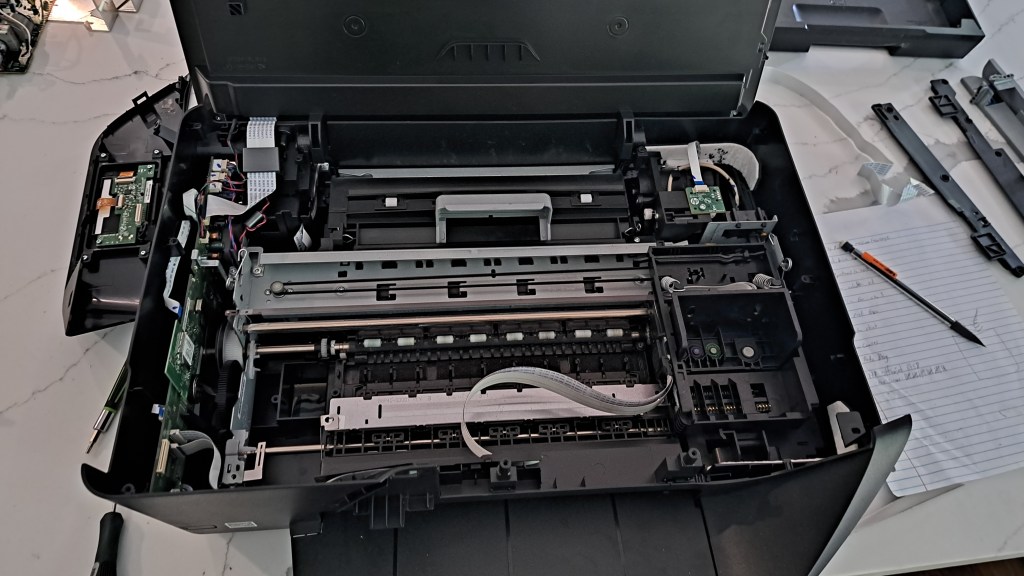
Engineers at HP and Brother still have not figured out a system for controlling the application of an inkjet that avoids a gantry of motors and pulleys. These are the most valuable bits, in my opinion. DC motors are always fun, and the gantry system often has a couple of nice stainless steel shafts.
THE YIELDS:
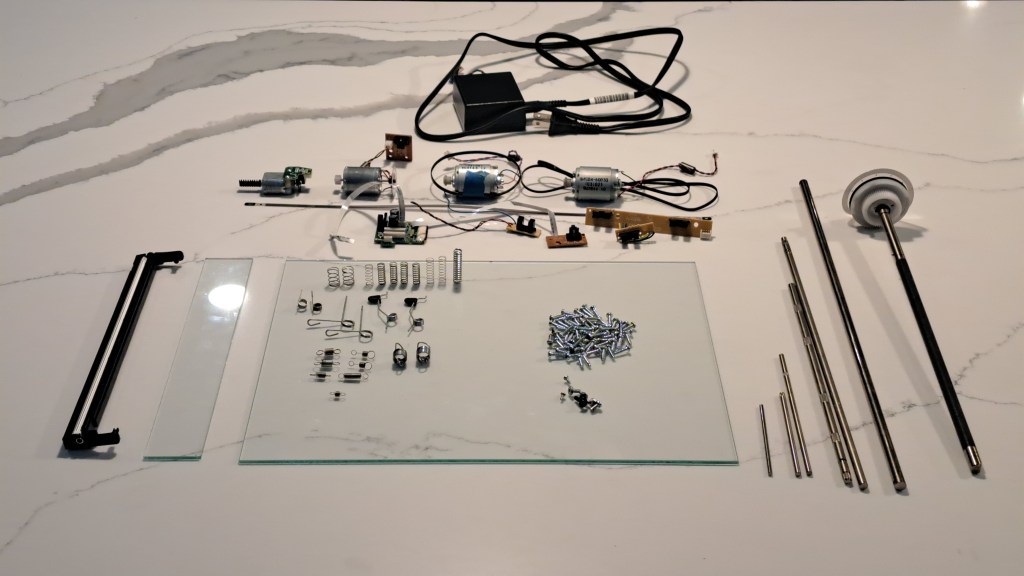
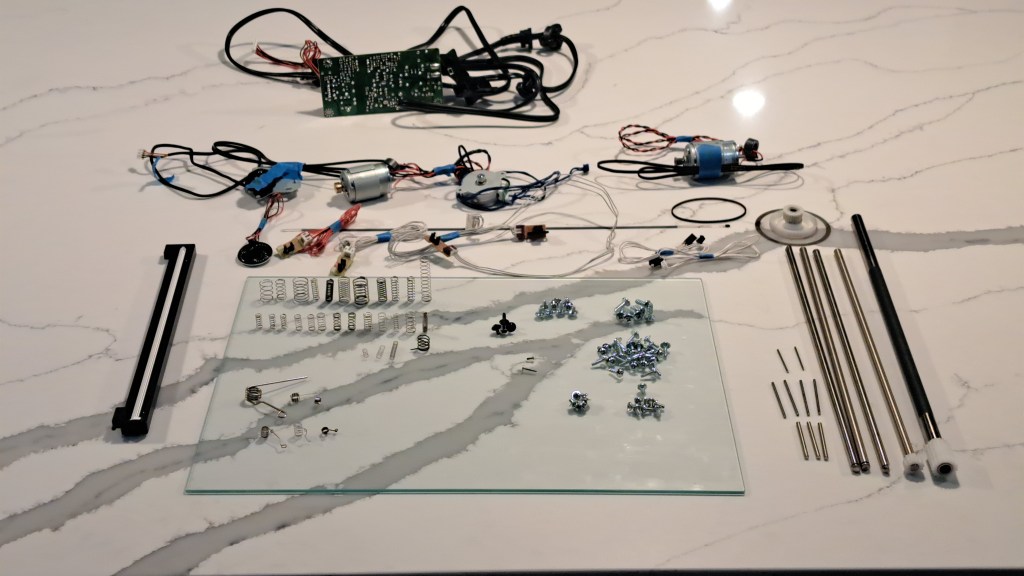
HP Officejet 6958:
- Screws (Hex): 76
- Big shafts: 4
- Small shafts: 3
- Motors: 4
- Compression Springs: 10
- Tension Springs: 9
- Torsion Springs: 6
- Sensors: 6 (+2 on motors)
- Glass Plates: 2
Brother Work Smart Series Model Mfc – J995DW
- Screws (Philips): 70
- Big shafts: 5
- Small shafts: 9
- Motors: 4
- Compression Springs: 29
- Tension Springs: 0
- Torsion Springs: 5
- Sensors: 4 (+2 micro switches)
- Glass Plates: 1
HP Photosmart C4480:
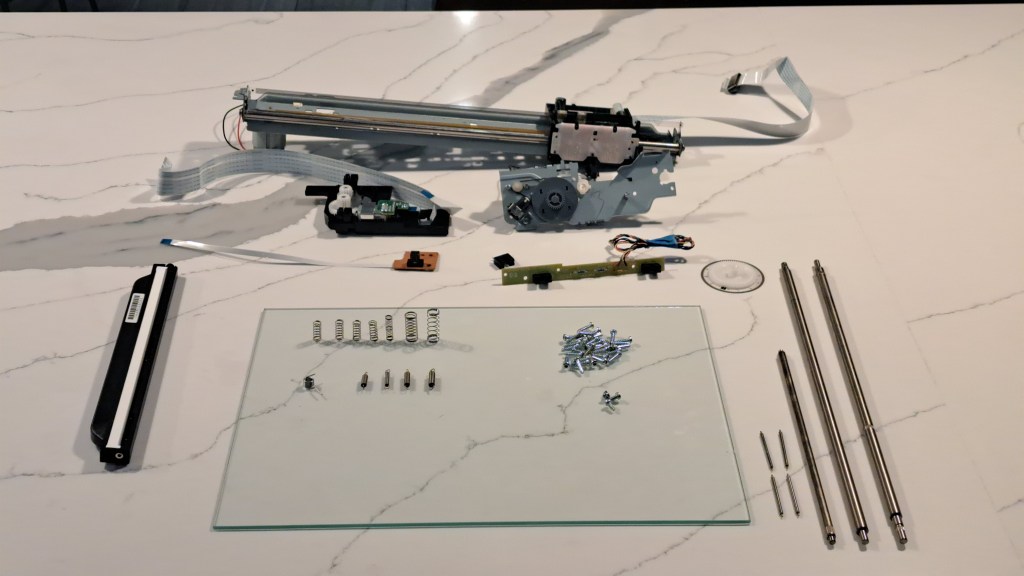
- Screws (Hex): 35
- Big shafts: 4
- Small shafts: 4
- Motors: 3
- Compression Springs: 7
- Tension Springs: 4
- Torsion Springs: 1
- Sensors: 5 (+1 on motor)
- Glass Plates: 1
IN TOTAL:

- Screws : 181
- Big shafts: 13
- Small shafts: 16
- Motors: 11
- Compression Springs: 46
- Tension Springs: 13
- Torsion Springs: 12
- Sensors: 18 (+2 micro switches)
- Glass Plates: 4
That’s just the stuff I thought was worth saving/recording.
I also saved the power supplies.
Of special note is the optical sensors that these devices use to record the positions of motors/gantries. I’ll probably do a follow-up post about how these work [out now!], but they accompany a ribbon or disc that has a series of opaque and translucent portions. I think these could also come in useful, aside from just being a cool device to explore.
Well, I had fun reducing these carefully engineered, optimized for economy rather than operation, machines down to a few useful components.
(Now I’m gonna put those components, some ink, and hunks of plastic in a box, shake it around for a while, and witness the birth of a whole new printer. Life is miraculous…)

 What Will Makes
Leave a reply to Scoping Out Optical Encoders – What Will Makes Cancel reply