This is a pendulum wall clock with strike and chime features, the movement of which was manufactured by Hermle. The chime is the Westminster melody that occurs on the quarter hours, with the strike sounding only on the hour.

This is is how it came to me, and you can tell from the outset it has both chime and strike because there are three things to wind on the front (time + chime + strike).

And here is my first look at the inside and the chimes.
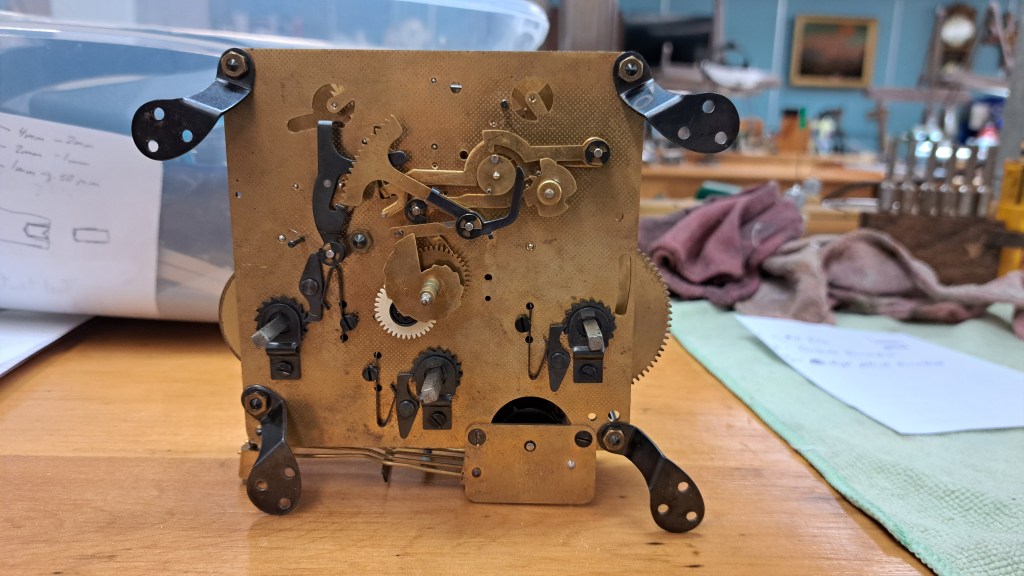
I removed the movement from the case and studied the mechanism. The critical features are the snail cam in the middle that tells the trike train how many times to strike and the cam toward the upper right. That cam regulates the chime. It has four different sections, each longer than the last, which is in keeping with the Westminster melody which is short for the first quarter, a little longer for the half hour, etc.
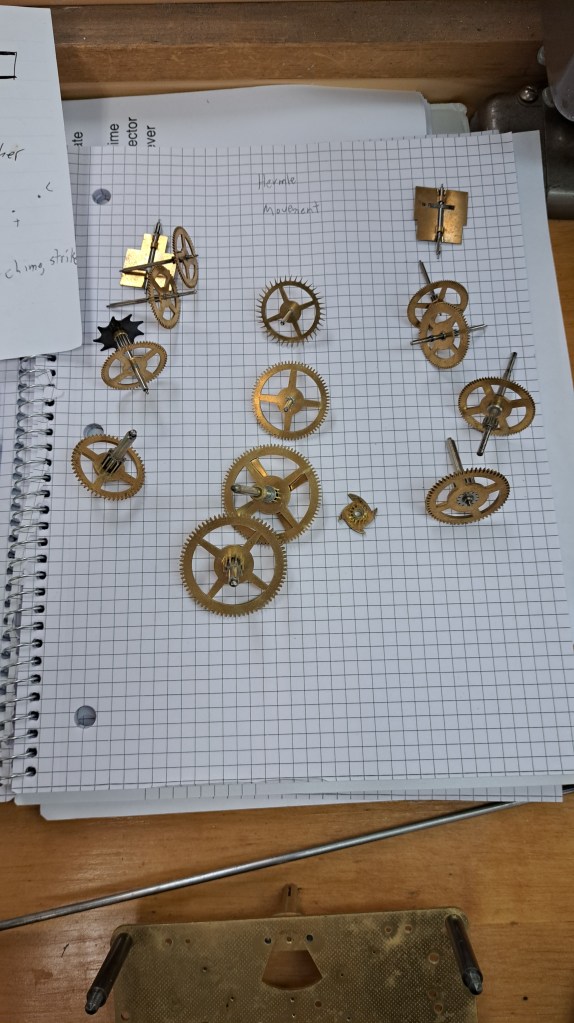
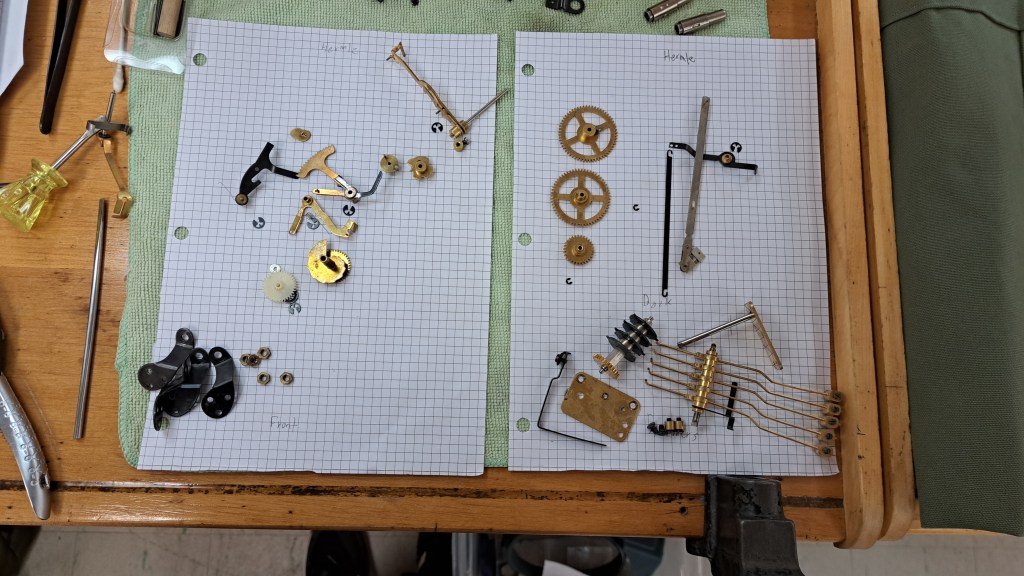
I then disassembled the movement completely. Above is the strike, time, and chime train (in that order), and below are the other bits that go on the outside of the movement plates.
Not pictured here is the cleaning process (ultrasonic cleaner, toothbrush, drying), and servicing of the mainsprings, which includes cleaning them and applying an appropriate amount of oil.

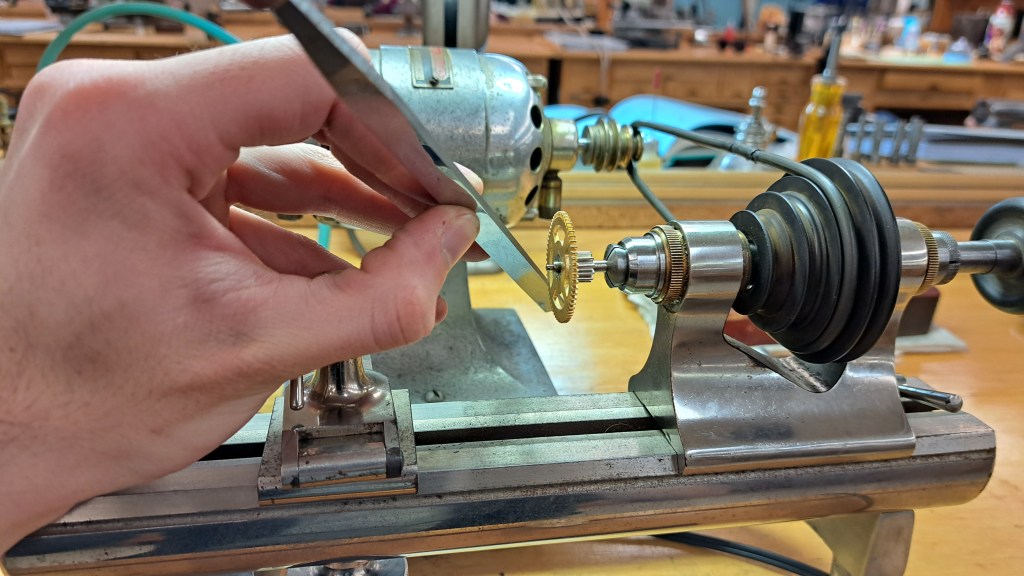
Next I burnished the pivots. To familiarize me with different techniques, my instructor first taught me to use buffing sticks and is now having me burnish them with carbide (pictured above) and polished steel (below).
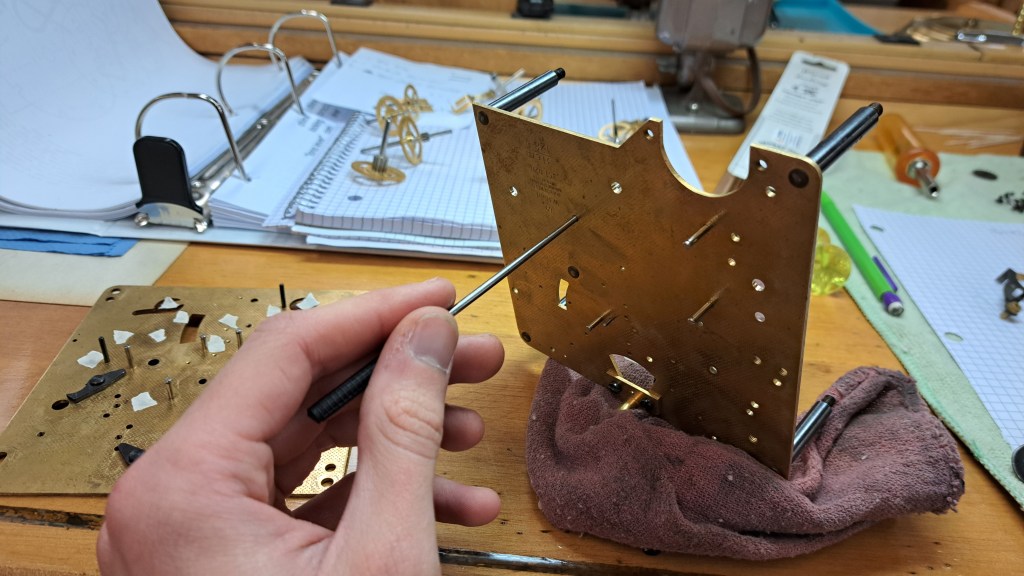
Then I serviced the pivot holes with a smoothing broach.
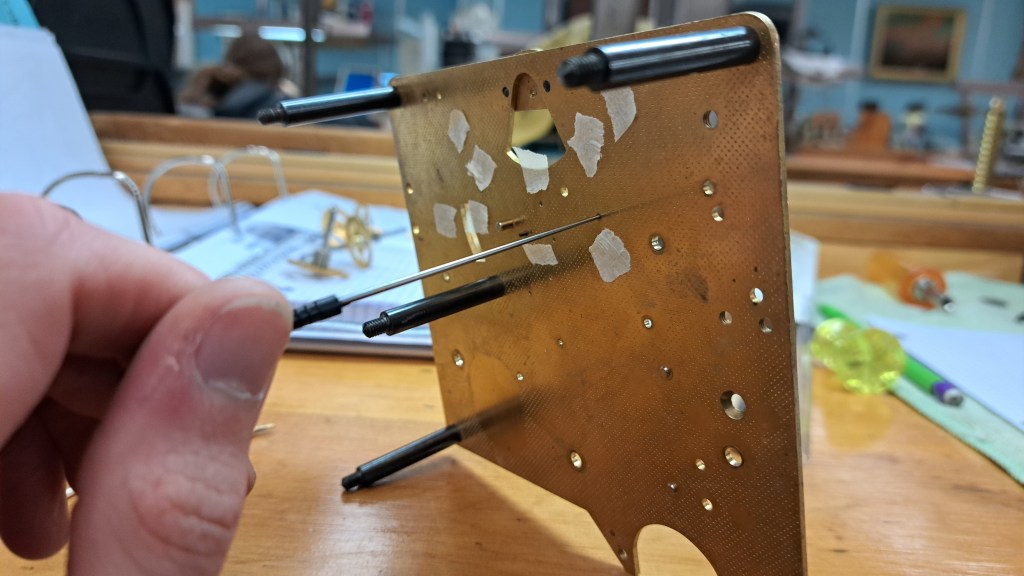
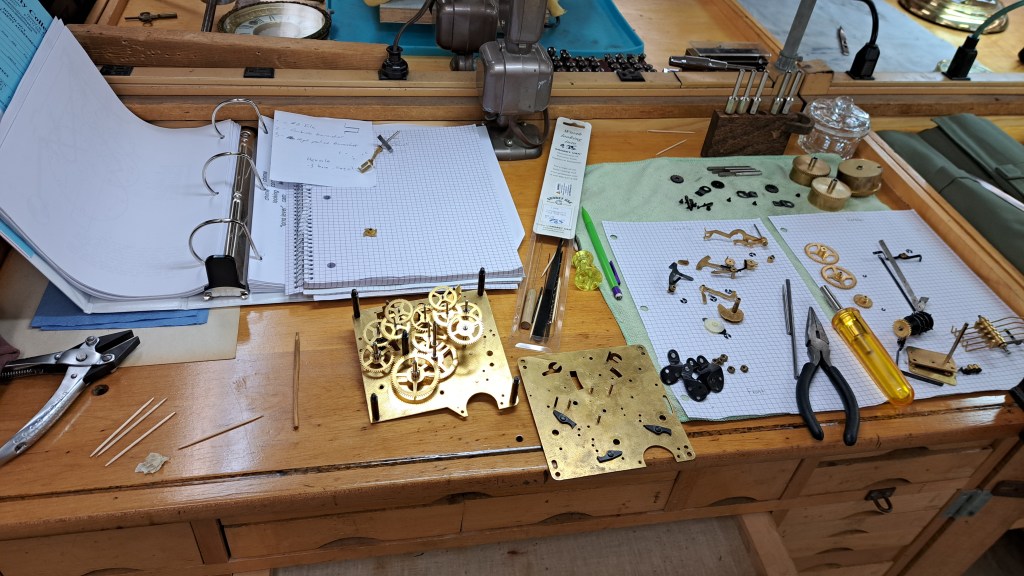
Here’s a photo mid-reassembly. The escapement anchor or pallets is singled out in the upper left because I did some testing on it to ensure a good beat.

The strike and chime is all triggered by this four lobed cam that is friction fit to the minute wheel. Here is a photo of me fitting it back in with a punch and hammer.
And finally it is all up and running – The Westminster melody is now stuck in my head!
The Westminster chime is sometimes called the Cambridge quarter and this is because it did originate in Cambridge. According to the venerable wikipedia, “The Westminster Quarters were originally written in 1793 for a new clock in Great St Mary’s, the University Church in Cambridge.” In 1851 a Cambridge alum tuned the new clock at Westminster Palace (Big Ben) to the melody he was familiar with.
Wikipedia again: “The prayer inscribed on a plaque in the Big Ben clock room reads:
All through this hour
Lord be my guide
That by Thy power
No foot shall slide.
The conventional prayer is:
O Lord our God
Be Thou our guide
That by Thy help
No foot may slide. “
In my head, though, it’s just:
bum bum bum bum,
bum bum bum bum.
 What Will Makes
Leave a comment