Tag: history of technology
-
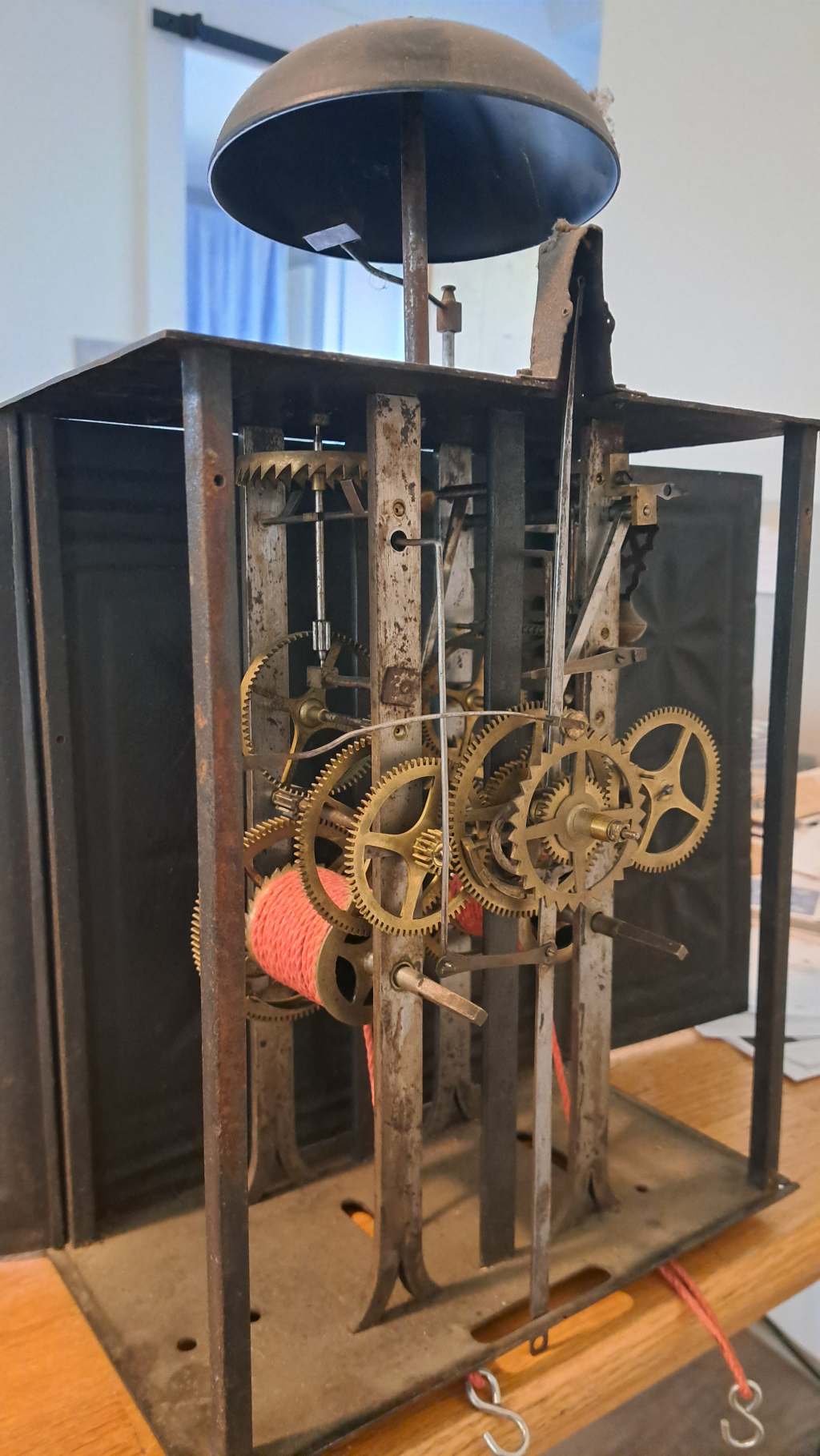
Verge or Crown Wheel Escapement Comtoise/Morbier Clock
This is a french Comtoise or Morbier clock with a crown wheel escapement. Also known as a verge escapement, this form of controlling the release of energy is the earliest known type of escapement, and the one used for the longest time, supplanted in the early to mid 19th century by the anchor escapement. Here’s…
-
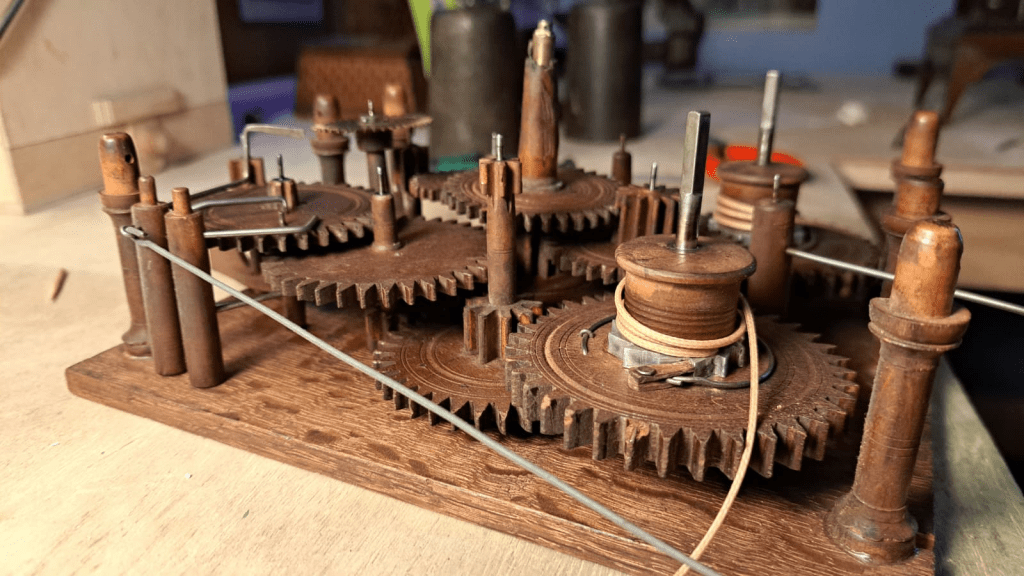
Repairing an Eli Terry 30-Hour Wooden Clock
Here is a beautiful Pillar and Scroll clock, likely dating to the 1820’s or 1830’s. Eli Terry innovated new ways to produce wooden works clocks, achieving the first mass-production with interchangeable parts. Several very clever design and production details made this clock affordable to more people than previous brass-movement tall case clocks were. Our first…
-
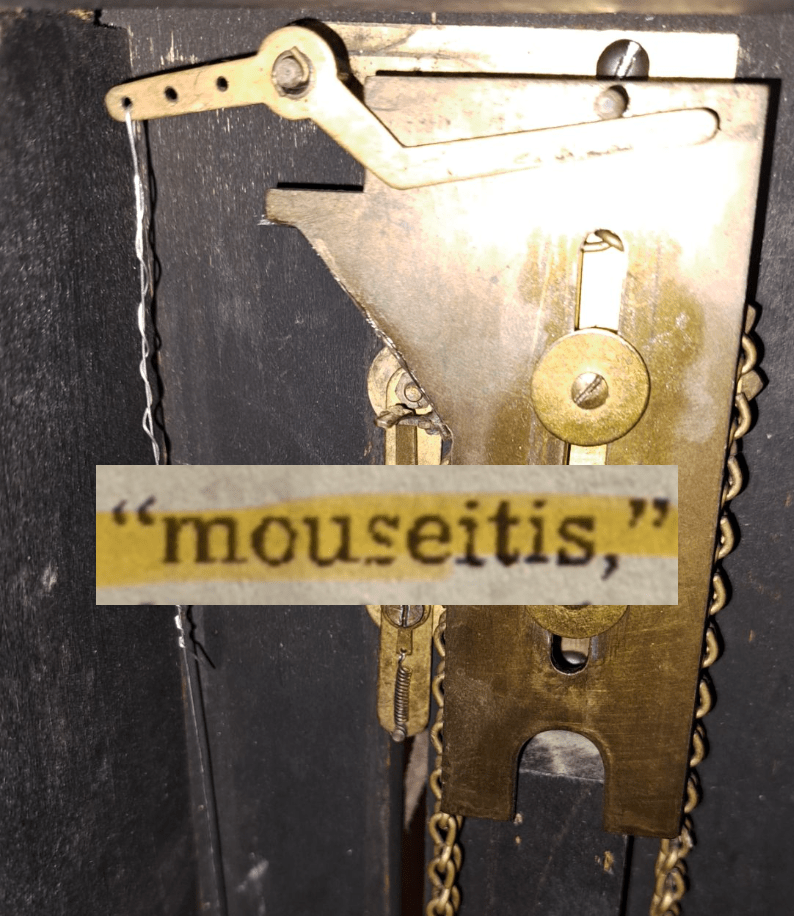
Dickory Dickory Clock: Curing “Mouseitis”
“Dickory Dickory dockThe mouse ran up the clockThe clock struck oneThe mouse sat stillThe Dickory Dickory clock was ill!” Here is a charming clock invented by Elmer Ellsworth Dungan around 1908 for his daughter who loved the nursery rhyme: “The Dickory Dickory Clock.” [at various times and places the rhyme has gone “hickory dickory,” “dickory…
-
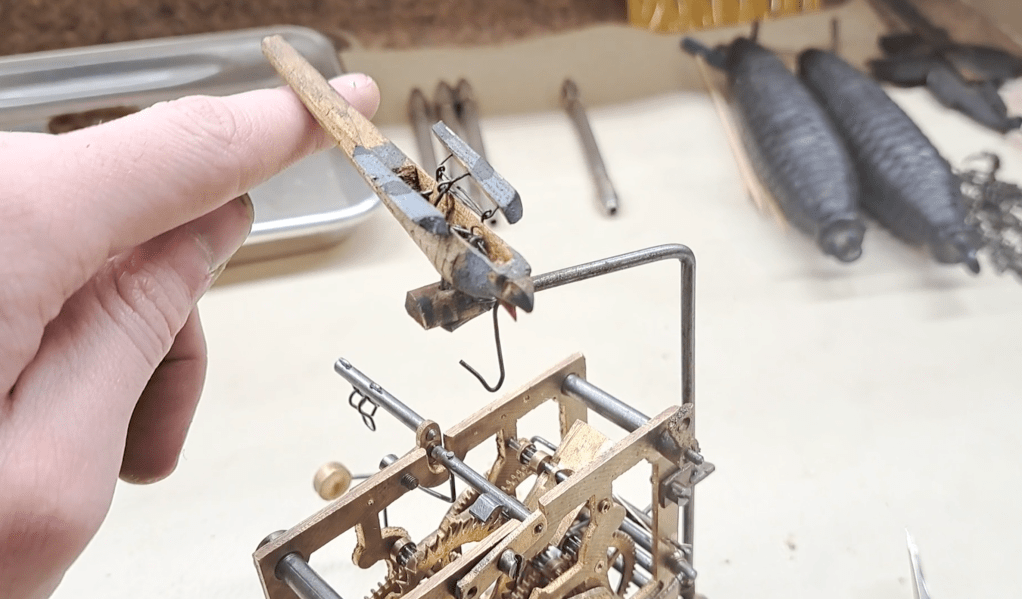
Pre-WWI Cuckoo Clock with Articulated Wings
This is a cuckoo clock that was probably made between 1860 to 1914 in the Black Forrest in Germany (according to this). Aside from having cast bronze plates with a lyre pattern, the beautiful wooden bird that the mechanism puppets not only opens its beak but also spreads its wings! First I disassembled and cleaned…
-
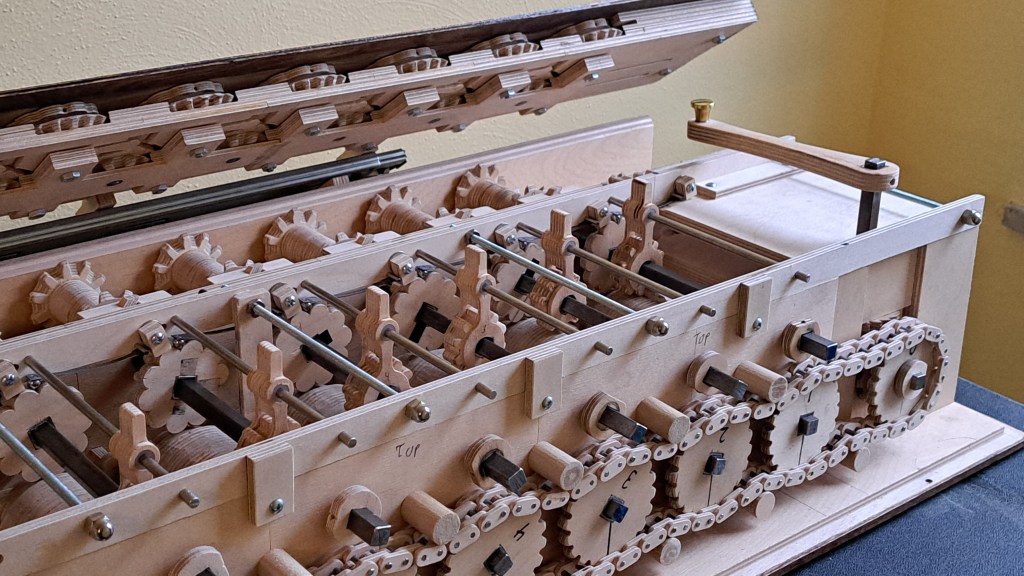
My Mechanical Calculator: How and Why
This is my homemade mechanical calculator. For the why and how it works, I made this video about it: To give a little more about how I made it, I dug up old drawings I made of the parts. What follows is an explanation of making the calculator using those as a guide. After studying…
-
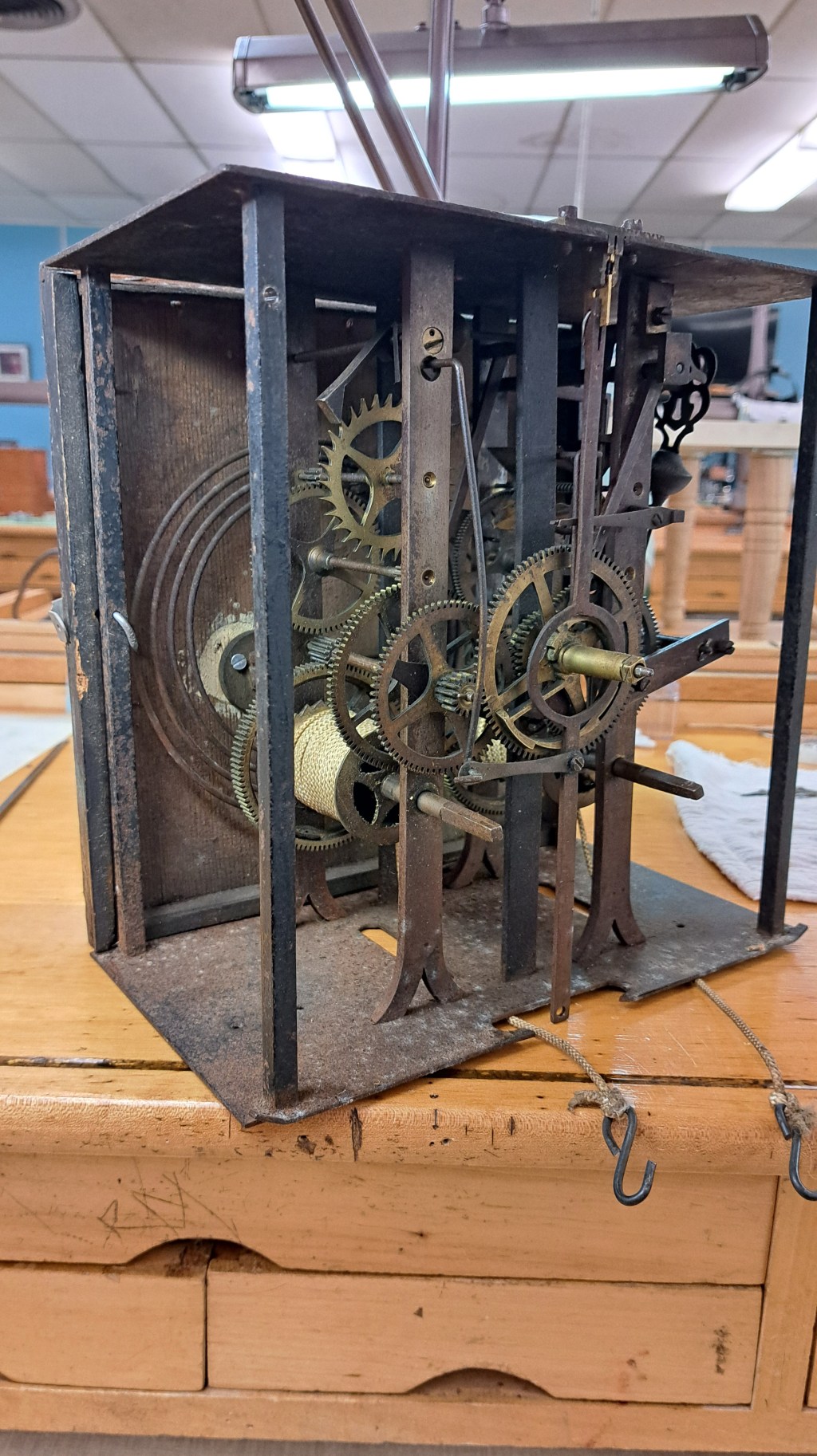
Comtoise Clock: Repair and Determining Geography
This is what’s known as a Comtoise or Morbier grandfather clock. Let’s clean it up and get it ticking again, then we can discuss its name. Someone repainted the case. My instructor and I began to scrape the paint away, but that process is still ongoing. Here’s our first look at the movement. With a…
-

English Translation of “The Art of Working Precious Stones For Use in Watchmaking and Optics” by N. Dumontier, 1843
English translation of L’art de travailler les pierres précieuses à l’usage de l’horlogerie et de l’optique… Par N. Dumontier I believe this is one of the earliest sources about using jewels in clock and watchmaking. I mainly used google translate and checked the translation where I felt the phrasing was off. “The Art of Working…
-
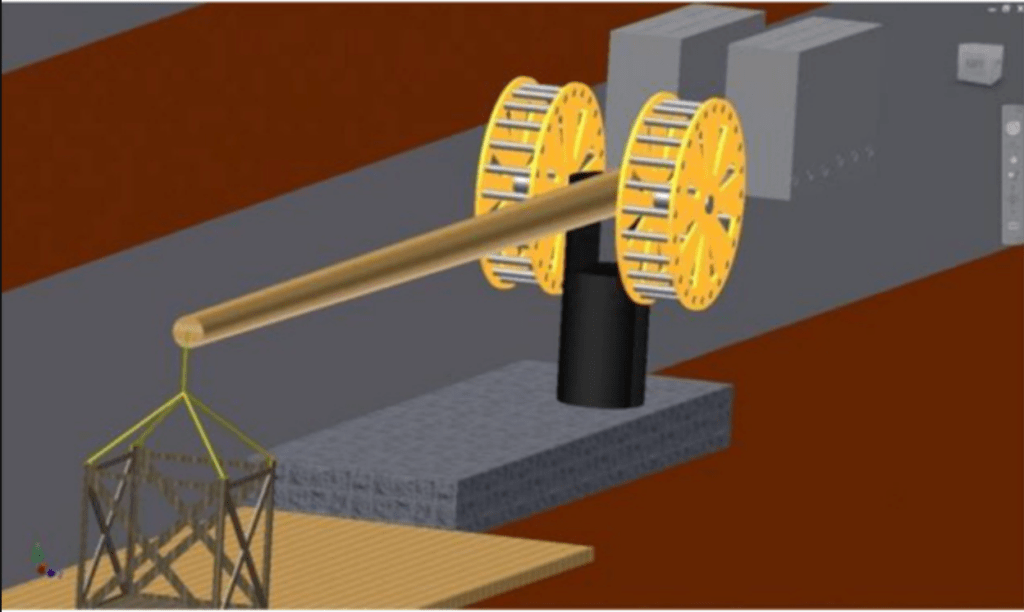
The Mēchanē in Prometheus Bound: Recognizing the Role of Technology on Stage
This is a Classics essay I wrote that was then published in an academic journal, Discentes. This is an essay I originally wrote for a Classics seminar at college. As a senior seminar for Classics majors and minors, it attempted to draw on and explore many dimensions of Greek and Roman antiquity through analyzing Greek…
-
-
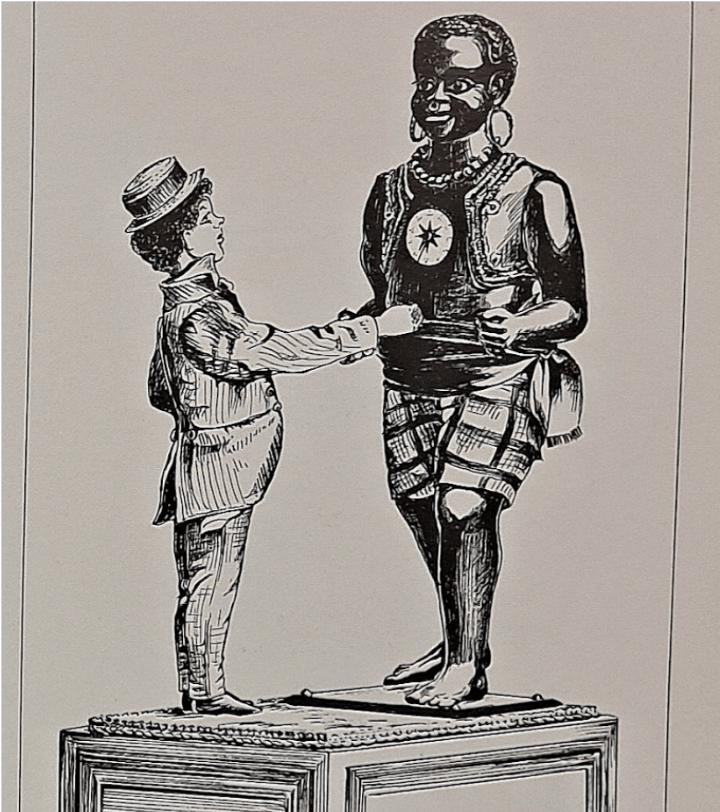
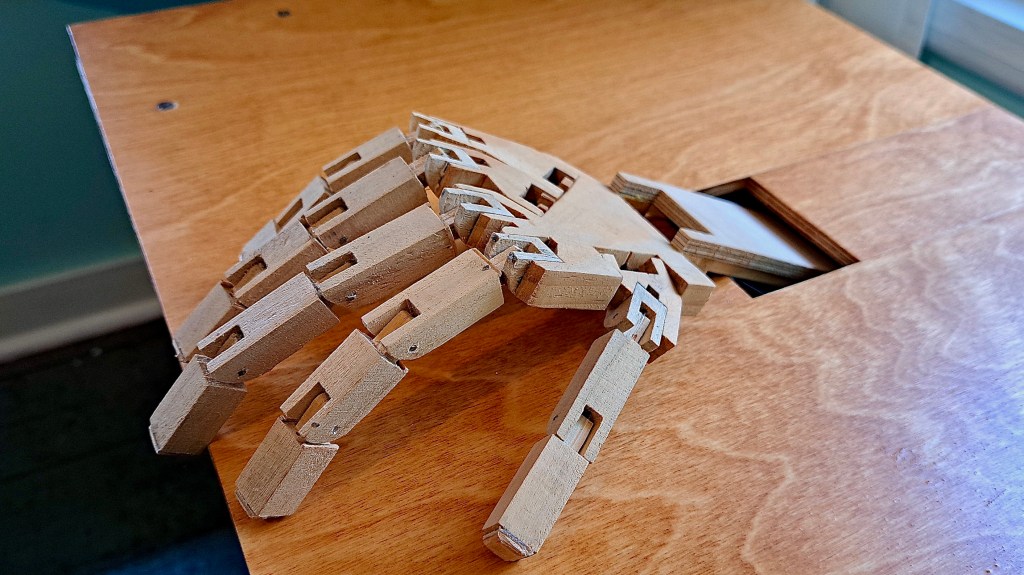
Thesis: The “Other” in Nineteenth-Century French Automata: Technology, Domestication, and Imperialism
The “Other” in Nineteenth-Century French Automata: Technology, Domestication, and Imperialism Abstract: Automata – mechanical, self-moving representations of animals and humans – have been studied by historians mainly to account for their popularity in the European Enlightenment, where they influenced conceptions of how matter takes on life and agency in a mechanistic world. However, automata continued…
 What Will Makes